Category: Uncategorized

  • What Is Lev? The Ancient Hebrew Word That Reveals the Heart of a Kingdom Builder

    What Is Lev? The Ancient Hebrew Word That Reveals the Heart of a Kingdom Builder

    Ambition can build a career. It can also quietly hollow out a person.

    That is why the ancient Hebrew word lev matters.

    Written לֵב, lev is commonly translated as “heart.” But in the Hebrew Scriptures, it means far more than emotion. Lev describes the inner person: the place of thought, desire, will, motives, discernment, and character.

    Your lev is the command center of your life.

    It determines what you pursue, why you pursue it, what you protect, and what you are willing to compromise to get there. For a Kingdom Builder, this changes the question from How much can I accomplish? to What kind of person is directing the accomplishment?

    Vision without execution is fantasy. But execution without a formed heart becomes self-destruction with better branding.

    1. Lev Means More Than Feelings

    When modern people hear “heart,” we often think of emotion. Biblical Hebrew presents a wider and more integrated picture.

    The lev includes:

    • Your thoughts and mental patterns
    • Your desires and motivations
    • Your will and decision-making
    • Your moral reasoning
    • Your emotional life
    • Your character before God

    In other words, lev is the operating center of the whole person.

    This is why Scripture can speak of a heart that understands, plans, hardens, listens, rejoices, wanders, or becomes wise. The biblical heart is not passive. It interprets reality and directs action.

    That makes lev essential for professionals, entrepreneurs, educators, and leaders. Your calendar reveals your priorities, but your lev reveals the architecture beneath them.

    You can have excellent systems and corrupt motives. You can have a compelling brand and an ungoverned inner life. You can win publicly while losing privately.

    The heart is where alignment begins.

    For a broader view of the inner life, compare What Is Ruach? and What Is Nefesh?. Ruach speaks to breath and spirit; nefesh speaks to the whole living person. Lev names the inner command center that gives direction to both.

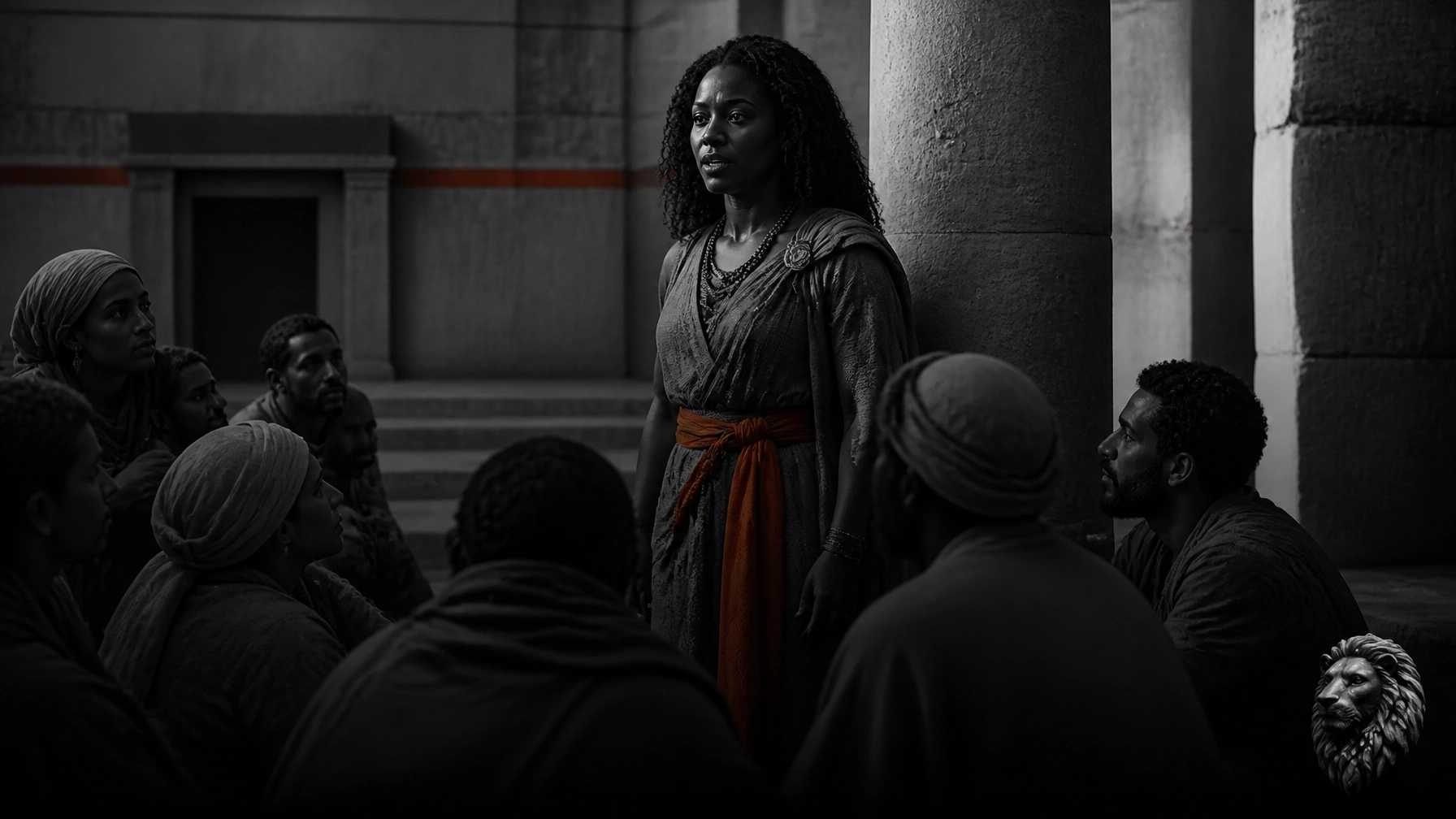
    Black Afro-Asiatic biblical-era woman warrior-scholar guarding a luminous architectural gateway at her chest

    2. Lev Is the Command Center of the Builder

    Every builder has a control room.

    In architecture, the control room determines how the entire structure functions. In aviation, the cockpit directs the aircraft. In leadership, the lev determines whether power is stewarded or abused.

    A Kingdom Builder does not merely ask:

    • What can I produce?
    • How quickly can I scale?
    • How many people can I influence?
    • How visible can I become?

    A Kingdom Builder also asks:

    • What is driving me?
    • What am I becoming while I build?
    • Who benefits from this work?
    • What would success cost my integrity?
    • Can this ambition survive before God’s examination?

    The lev is where motives are audited.

    This is the difference between hustle and holy discipline. Hustle culture treats exhaustion as proof of commitment. Biblical wisdom treats alignment as proof of maturity.

    The goal is not to eliminate ambition. The goal is to bring ambition under wise authority.

    Avodah Dynamics calls this Character Over Popularity. Popularity measures attention. Character measures what remains when attention disappears.

    3. Guarding the Heart Is a Strategic Protocol

    Proverbs 4:23 says:

    “Above all else, guard your heart, for everything you do flows from it.”

    The Hebrew emphasis is not sentimental. It is architectural.

    Guarding your heart means protecting the source from which your life, work, decisions, and relationships flow. It means installing gates around the inputs shaping your imagination and the narratives governing your choices.

    A practical lev audit asks:

    1. What voices are discipling my desires?
    2. What am I consuming before I make major decisions?
    3. Where have comparison and fear entered my strategy?
    4. What compromise am I calling “necessary”?
    5. What do I want people to believe about me?
    6. What does God already know about me?

    Guarding the heart does not mean becoming suspicious of everyone. It means becoming responsible for what you allow to govern you.

    This is especially important when you are building under pressure. Pressure does not create character from nothing; it exposes the structure already present.

    Use Scripture, wise counsel, rest, prayer, and honest community as protective architecture. If anxiety is distorting your discernment, Avodah’s resource on Christian Help for Anxiety offers practical protocols for naming fear, grounding your body, and returning to one faithful next action.

    4. God Looks at the Lev, Not the Performance

    In 1 Samuel 16:7, God tells Samuel that people look at outward appearance, but the Lord looks at the heart.

    The Hebrew word is related to levav, the inner person.

    This does not make excellence irrelevant. It makes excellence accountable.

    David : דָּוִד (David)

    David is described as a man after God’s own heart. His story includes courage, creativity, leadership, failure, repentance, and restoration. David’s relevance is not that he was flawless; it is that his inner orientation repeatedly returned to God.

    For a Kingdom Builder, David shows that character is not the absence of failure. It is the posture that determines what happens after failure.

    Bezalel : בְּצַלְאֵל (Betzal’el)

    Bezalel was appointed to craft the Tabernacle. Exodus describes him as filled with wisdom, understanding, knowledge, and skill for the work.

    His name means “in the shadow of God.” His craftsmanship reveals that spiritual depth and technical excellence do not compete. The heart can be formed for both worship and high-level execution.

    Bezalel represents faith-rooted human-impact innovation: building beautiful, useful structures that serve a larger purpose.

    Solomon : שְׁלֹמֹה (Shlomo)

    When Solomon became king, he asked for a listening heart, often expressed in Hebrew as lev shomea: a heart able to hear, understand, and judge wisely.

    Solomon did not ask first for wealth, influence, or victory. He asked for discernment.

    A listening heart is not passive. It receives truth, processes complexity, and responds with wisdom. This is the posture required in leadership, coaching, education, and stewardship.

    Hannah : חַנָּה (Channah)

    Hannah poured out her lev before God in prayer. Her story demonstrates that the heart is not only a place of strategy; it is also a place of honest surrender.

    She did not perform strength. She brought her actual grief, desire, and disappointment before God.

    Hannah reminds builders that emotional honesty is not weakness. It is a form of alignment.

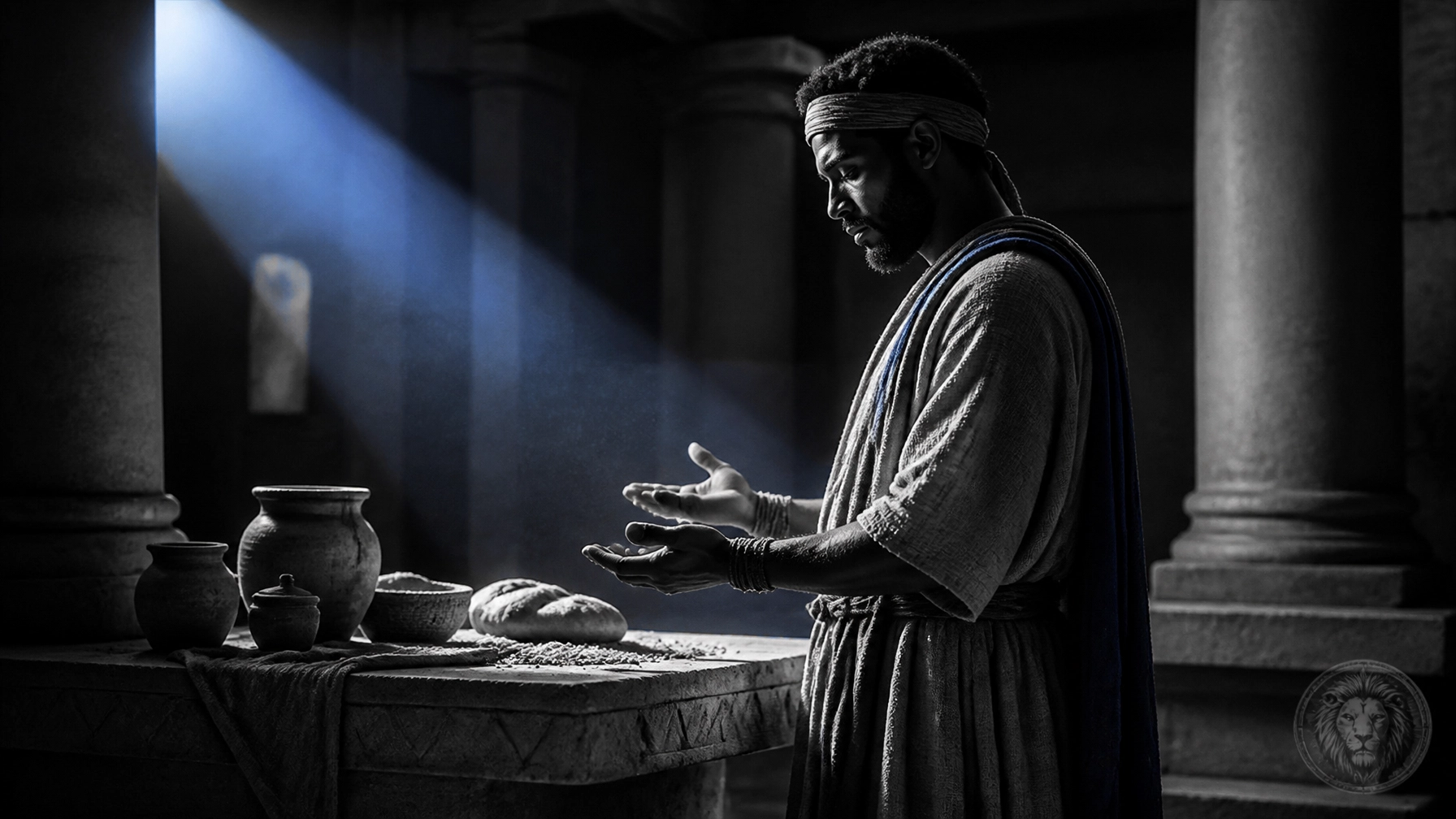
    Black Afro-Asiatic biblical-era leader listening to an elder teacher in a stone workshop, with a single blue beam of light

    5. A New Heart Means a New Operating System

    Ezekiel 36:26 records God’s promise:

    “I will give you a new heart and put a new spirit in you. I will remove from you your heart of stone and give you a heart of flesh.”

    The contrast is between a hardened inner person and a responsive one.

    A heart of stone may still be productive. It may still lead teams, generate revenue, build platforms, and gain applause. But it resists correction. It protects image over integrity. It confuses control with stewardship.

    A heart of flesh is responsive. It can receive instruction, recognize conviction, change direction, and remain tender without becoming passive.

    This is not self-reinvention through willpower. It is transformation at the source.

    That transformation changes how you work:

    • You stop treating people as leverage.
    • You stop measuring worth by visibility.
    • You stop calling burnout sacrifice.
    • You stop confusing speed with obedience.
    • You stop building an impressive life that your soul cannot inhabit.

    6. The Avodahian Heart Moves Through Three Stages

    The Avodah ecosystem frames identity through three progressive stages:

    Built Different

    A lev that is Built Different refuses to let the market define worth. It rejects grind culture without rejecting discipline. It understands that ambition is a tool, not a master.

    Work Is Worship

    A formed heart recognizes that work is worship when it is done with integrity, excellence, and service. As the Avodah manifesto states:

    At Avodah Dynamics, we are reclaiming the Monday-to-Saturday hustle as a masterclass in biblical leadership development and christian lifestyle for a higher purpose.

    The work itself becomes an offering: not because every task feels spiritual, but because every task can be aligned with faithful stewardship.

    Avodahian

    An Avodahian is not simply someone who consumes inspiring ideas. An Avodahian builds according to a philosophy: character before applause, service before ego, structure over sermons, and sustainable action over temporary intensity.

    That is the lev in practice.

    You can explore the wider framework in the Kingdom Builder definitive guide and Blueprint for Kingdom Builders.

    7. Build a Lev Protocol for Your Week

    Use this simple weekly protocol to bring your inner life into your execution architecture.

    Before the week begins:
    Name the assignment. What are you actually building, and who is it meant to serve?

    Before major decisions:
    Audit the motive. Is the decision driven by obedience, fear, ego, comparison, or genuine stewardship?

    During deep work:
    Protect attention. A scattered mind produces scattered architecture.

    After conflict:
    Ask what the moment revealed about your heart. Do not only evaluate what the other person did.

    At the end of the week:
    Review your outputs and your formation. What did you accomplish, and who did you become while accomplishing it?

    Then return to the central question:

    Is my heart directing my work, or is my work discipling my heart?

    Listen While You Build

    Pair this reflection with Avodah Dynamics’ SoundCloud soundscape for focused work and spiritual recalibration:

    https://soundcloud.com/avodahdynamics/ruach-8

    Explore more faith-fueled soundscapes and deep-work audio at avodahsound.com.

    Your lev is not a decorative part of your calling. It is the place where your motives are formed, your decisions are tested, and your character becomes visible.

    Guard it. Listen with it. Let God renew it.

    Then build from the inside out.

    Ready to practice the architecture together? Join The Tribal Challenge.

    Frequently Asked Questions About Lev

    What is the meaning of lev in Hebrew?

    Lev (לֵב) means heart, but its biblical meaning includes the inner person, mind, will, emotions, motives, moral reasoning, and character.

    What is lev in the Bible?

    In the Bible, lev is the inner center from which thoughts, decisions, desires, and actions flow. It appears in passages such as Proverbs 4:23, 1 Samuel 16:7, and Ezekiel 36:26.

    What does “guard your heart” mean in Proverbs 4:23?

    It means to protect and direct the inner life because your thoughts, motives, desires, and decisions shape the course of your life.

    What is lev shomea?

    Lev shomea means “a listening heart.” Solomon uses this idea when asking God for the ability to hear, understand, and judge wisely.

    How does lev relate to Kingdom Builders?

    For Kingdom Builders, lev is the command center of purpose and execution. It keeps ambition aligned with integrity, stewardship, service, and God’s purposes.

  • Faith-Fueled Fitness: 7 Biblical Protocols to Strengthen Your Body and Steward Your Calling

    Faith-Fueled Fitness: 7 Biblical Protocols to Strengthen Your Body and Steward Your Calling

    Your body is not an accessory to your calling.

    It is part of the system that carries it.

    The meetings, the classroom, the business, the late-night strategy session, the family responsibilities, the leadership decisions, and the work nobody sees all require physical capacity. When your energy is unstable, your execution suffers. When your recovery is ignored, your judgment narrows. When your body becomes an enemy, discipline becomes punishment instead of stewardship.

    That is why Christian fitness cannot be reduced to gym culture, appearance, or a temporary challenge. It is the disciplined practice of caring for the body, mind, and habits God has entrusted to you so you can serve with strength, clarity, and integrity.

    The goal is not body obsession.

    The goal is readiness.

    A sustainable fitness life does not require extreme workouts, expensive equipment, or a perfect schedule. It requires a clear architecture: consistent training, intelligent nutrition, recovery, emotional resilience, accountability, and a reason strong enough to survive the days when motivation disappears.

    The Avodah approach is simple: Work Is Worship, and stewardship must reach the body. Your training plan should support your calling, not compete with it. Your nutrition should fuel your responsibilities, not create another source of shame. Your rest should restore your capacity, not make you feel guilty.

    Vision without execution is fantasy. The same principle applies to health. Wanting more energy is not a protocol. Wanting to feel stronger is not a schedule. A vision becomes useful when it is translated into repeatable actions.

    Below are seven biblical protocols for building sustainable fitness into the life you already have.


    1. Build From Stewardship, Not Shame

    The first protocol is internal.

    Before you select a workout plan, define what fitness is for. If your deepest motivation is shame, comparison, or fear, your consistency will depend on how you feel about your body that day. That is unstable architecture.

    Stewardship creates a stronger foundation.

    Stewardship says:

    • My body deserves care because it carries my assignment.
    • Strength is useful because service requires capacity.
    • Health is not a reward for becoming worthy.
    • Rest is not laziness.
    • Training is not punishment for eating.
    • Progress is not limited to what can be photographed.

    This matters for faith-driven professionals because ambition can quietly turn fitness into another performance metric. You may begin with a healthy goal and end up measuring your worth by your weight, appearance, pace, or lifting numbers.

    The protocol is to separate identity from outcome.

    You are not more valuable because you completed a workout. You are not less valuable because you missed one. Your discipline matters, but it does not determine your dignity.

    Paul, Sha’ul, the apostle and teacher who connected spiritual formation with disciplined action, used the image of an athlete training with intention in 1 Corinthians 9:24–27. His point was not vanity. It was directed effort. A life with purpose requires the ability to say yes to what matters and no to what weakens your assignment.

    That is the same architecture behind Avodah Dynamics’ Built Different philosophy: not superiority, but responsibility. You are called to build a life that can carry what you have been entrusted to carry.

    The Stewardship Audit

    Write down three answers:

    1. What does my calling require physically?
    2. What current habit is reducing my capacity?
    3. What form of care would help me serve more consistently?

    Your answers may reveal that you do not need a more intense plan. You may need more sleep, better hydration, regular walking, strength training, fewer skipped meals, or professional support for stress and anxiety.

    Read more about health as a builder’s asset in Health Is Wealth: Why Your Health Is a Builder Asset.

    Fitness begins when you stop asking, “How do I fix my body?” and start asking, “How do I faithfully steward the body that carries my work?”


    2. Install a Sustainable Training Architecture

    Consistency beats intensity when intensity cannot be repeated.

    A sustainable Christian fitness plan should fit the life you are actually living: not the imaginary version of your life with unlimited time, energy, and motivation.

    For most adults, a balanced training week can include:

    • Two or three strength sessions
    • Regular cardiovascular activity
    • Daily low-intensity activity such as walking
    • Mobility or stretching several times per week
    • At least one intentional recovery day

    The exact plan depends on your health, experience, schedule, and goals. The principle is more important than the template: create enough challenge to adapt without creating so much stress that you abandon the system.

    A useful weekly structure might look like this:

    Day Training emphasis
    Monday Full-body strength
    Tuesday Brisk walk or moderate cardio
    Wednesday Full-body strength
    Thursday Mobility, walking, or recovery
    Friday Strength or intervals
    Saturday Longer outdoor activity or recreational training
    Sunday Rest, reflection, and gentle activity

    This is not a commandment. It is a starting blueprint.

    The right plan is the one you can execute during a busy quarter, a difficult family season, a demanding launch, or a period of emotional pressure. If your system only works when life is calm, it is not a system. It is a temporary performance.

    Daniel: Daniyyel, the exiled leader who maintained disciplined practices under pressure: demonstrates the power of intentional structure. His health choices in Daniel 1 were not about public display. They were about maintaining clarity, identity, and faithfulness in an environment designed to reshape him.

    That is relevant to modern professionals. Your environment is constantly training you. Your calendar trains you. Your food access trains you. Your commute trains you. Your notifications train you. Your social circle trains you.

    You need an architecture that makes the right action easier to repeat.

    Use the Minimum Viable Session

    On high-capacity days, complete the full workout.

    On low-capacity days, preserve the pattern with a minimum viable session:

    • Ten minutes of walking
    • Two rounds of bodyweight exercises
    • A short mobility routine
    • A light bike ride
    • Five minutes of stretching and breathwork

    A small session is not failure. It is a bridge between intention and identity.

    The purpose is not to protect a streak at all costs. The purpose is to keep your relationship with disciplined action alive.

    Afro-Asiatic Black professional walking briskly beside architectural stone walls at dawn, monochrome with a subtle teal green accent


    3. Treat Nutrition as Fuel, Not Morality

    Nutrition becomes destructive when every meal is labeled as proof of righteousness or failure.

    Food is not a moral scoreboard.

    A stewardship-based approach to nutrition asks a more practical question: Does this choice help me live, work, train, recover, and serve with energy?

    Build most meals around:

    • A reliable protein source
    • Fruits or vegetables
    • High-fiber carbohydrates
    • Healthy fats
    • Water
    • Foods you genuinely enjoy and can access consistently

    You do not need to eliminate every food you like. You need a pattern that supports your goals without requiring constant obsession.

    For a professional managing meetings, deadlines, travel, family obligations, and unpredictable days, nutrition should reduce decision fatigue. Prepare repeatable meals. Keep useful snacks available. Drink water before you interpret fatigue as a lack of discipline. Eat enough to support training and concentration.

    A simple workday meal protocol might be:

    1. Eat a protein-centered breakfast or first meal.
    2. Keep water visible at your desk or workstation.
    3. Build lunch before hunger becomes an emergency.
    4. Include a fruit, vegetable, or high-fiber option with most meals.
    5. Keep one emergency meal available for chaotic days.
    6. Avoid using restriction to compensate for emotional stress.

    Fasting may be meaningful as a spiritual practice, but it should not be used recklessly, competitively, or as a substitute for medical care. People with diabetes, a history of disordered eating, certain medications, pregnancy, or other health conditions should speak with a qualified professional before fasting.

    Nutrition is also emotional. If you regularly use food to manage anxiety, grief, loneliness, or exhaustion, the answer is not more shame. It may be support, counseling, better sleep, stress reduction, and a more structured environment.

    Christian fitness should produce greater freedom, not a new form of bondage.

    The Fuel Check

    Before your next meal, ask:

    • Will this help me stay focused?
    • Will this support recovery?
    • Am I physically hungry, emotionally overwhelmed, or both?
    • What choice would be nourishing without being extreme?

    Wisdom is not the loudest option. It is the option that remains faithful over time.


    4. Protect Recovery Like a Strategic Asset

    Many ambitious people treat recovery as something they earn after overextending themselves.

    That approach eventually collects interest.

    Sleep, rest, mobility, and emotional decompression are not interruptions to your calling. They are part of the operating system that allows you to carry it.

    Most adults need approximately seven to nine hours of sleep, though individual needs vary. Sleep affects focus, mood, appetite regulation, immune function, reaction time, and physical recovery. If you are consistently sleeping five hours and expecting peak execution, you are asking your body to produce from an empty account.

    Recovery also includes:

    • Rest days from intense training
    • Light activity between demanding sessions
    • Adequate food and hydration
    • Time away from screens
    • Emotional processing
    • Healthy boundaries
    • Medical care when necessary
    • Mental-health support when stress becomes unmanageable

    Elijah: Eliyahu, the prophet who experienced exhaustion and discouragement after intense public responsibility: offers a powerful recovery picture in 1 Kings 19. Before receiving further direction, he needed food, sleep, and restoration.

    The sequence matters.

    Sometimes the next spiritual instruction is not another demand. Sometimes the next faithful action is to recover enough to hear clearly.

    This does not mean avoiding responsibility. It means refusing to confuse depletion with devotion.

    The Avodah guide to Christian anxiety reinforces the importance of structure, prayer, community, and practical action when internal pressure rises. Fitness can support mental resilience, but exercise is not a replacement for qualified mental-health care.

    Create a Recovery Protocol

    Choose a consistent evening shutdown time.

    Then:

    1. Reduce intense work and unnecessary notifications.
    2. Prepare for the next morning.
    3. Dim lights and limit stimulating content.
    4. Use prayer, journaling, reading, or quiet music to transition.
    5. Keep your sleep environment cool, dark, and comfortable.
    6. Take persistent sleep problems to a qualified healthcare professional.

    Your body cannot recover from what your calendar refuses to release.

    Afro-Asiatic Black woman and man in a quiet recovery studio, stretching and breathing after training, monochrome with a teal green accent


    5. Train Resilience Without Worshiping Pain

    Discipline is not the same as suffering.

    Pain can be informative, but it is not automatically holy. Pushing through sharp pain, severe fatigue, dizziness, or injury is not evidence of greater faith. It may be evidence that your plan lacks wisdom.

    Resilience means learning how to stay engaged with the process through inconvenience, boredom, stress, and imperfect conditions. It means knowing when to press and when to adjust.

    A resilient training mindset includes four practices:

    Start Before You Feel Ready

    Motivation is unreliable. Use a scheduled start time, prepared clothing, and a simple first action. Put on your shoes. Walk for five minutes. Complete the warm-up. Action often creates the energy that emotion promised to provide.

    Use Grace Without Creating Escape Routes

    Grace means a missed workout does not become a collapsed identity.

    Do not use grace as permission to abandon every standard. Use it to return without self-condemnation.

    The next decision is more important than the last mistake.

    Measure More Than Appearance

    Track:

    • Energy
    • Sleep quality
    • Strength
    • Cardiovascular capacity
    • Mood
    • Mobility
    • Consistency
    • Recovery
    • Confidence in daily tasks

    A body becoming stronger may not change dramatically in the mirror at first. Your ability to carry groceries, climb stairs, focus through a demanding day, or remain emotionally steady under pressure is also progress.

    Practice Emotional Honesty

    If you keep skipping training, ask what is underneath it.

    Are you overwhelmed? Is the plan too demanding? Are you afraid of being seen? Are you exhausted from work? Are you using fitness to chase an impossible standard?

    David: Dawid, the shepherd, warrior, and king whose life included courage, grief, failure, worship, and restoration: shows that resilience is not emotional denial. His psalms repeatedly bring fear and pressure into honest conversation with God.

    That kind of honesty makes better discipline possible. You cannot build a sustainable system around information you refuse to acknowledge.

    If anxiety, depression, disordered eating, compulsive exercise, trauma, or persistent emotional distress is affecting your health, contact a qualified mental-health professional. Support is not a lack of faith. It is part of wise stewardship.


    6. Connect Training to Your Work and Calling

    Fitness should not live in a separate compartment from the rest of your life.

    The strongest routine is one that improves your ability to show up in the rooms where your calling requires you.

    Training can support:

    • Clearer thinking before important decisions
    • Better energy during long workdays
    • Greater stress tolerance
    • Confidence in leadership
    • More patience with family and colleagues
    • Physical capacity for service
    • A stronger sense of personal agency

    This is where Work Is Worship becomes practical. Your workout is not the whole assignment, but it can prepare you to carry the assignment with more stability.

    Build training around your professional rhythm.

    If mornings are your clearest time for deep work, train later. If evenings are consistently chaotic, create a short morning protocol. If you travel, build a hotel-room version. If you work from home, take walking meetings. If you lead a team, model sustainable discipline instead of glorifying exhaustion.

    Joshua: Yehoshua, the leader who moved a people from transition into responsibility: was called to courage and consistency in Joshua 1:9. His assignment required more than inspiration. It required daily leadership under pressure.

    Your fitness system should do the same. It should help you become more available to the work, people, and responsibilities in front of you.

    Create a Calling-Based Fitness Statement

    Complete this sentence:

    “I train so I can…”

    Your answer might be:

    • Lead my team with clarity.
    • Stay present with my children.
    • Build my business without burning out.
    • Serve my community with strength.
    • Finish the work I was entrusted to begin.
    • Enter demanding rooms without abandoning my health.

    Place that sentence where you can see it before training.

    This reframes fitness from a private performance into a public responsibility. Not because your body belongs to everyone else, but because your stewardship affects how you participate in the world.


    7. Use Community, Reflection, and Renewal

    Private ambition has limits.

    You can start a plan alone, but community helps you maintain perspective when progress feels slow. The right people make consistency visible, normal, and supported.

    Community is not about public comparison. It is about shared standards, honest reflection, and encouragement that does not require pretending.

    A strong accountability structure includes:

    • One person who knows your goal
    • A weekly check-in
    • A simple record of training and recovery
    • Permission to adjust the plan
    • Celebration of consistency, not only outcomes
    • A clear process for returning after a lapse

    Reflection turns activity into learning. At the end of each week, ask:

    1. What supported my consistency?
    2. What disrupted it?
    3. What did my energy teach me?
    4. What needs to change in the coming week?
    5. Where did I practice stewardship?
    6. Where did I use pressure instead of wisdom?

    Yeshua: Jesus, the central teacher of the Christian faith: modeled both public service and private withdrawal for prayer, including the rhythm described in Luke 5:16. His example reminds us that availability does not mean constant exposure or endless output.

    Renewal protects the quality of your contribution.

    The Built Different, Called to More framework speaks to this larger identity shift: purpose is not sustained by inspiration alone. It needs practices that bring belief into the calendar.

    The Avodahian does not wait for perfect conditions. An Avodahian builds a repeatable rhythm, returns after disruption, and learns to carry ambition without losing the soul.

    Minimal editorial still life with whole foods, water, running shoes, and journal on dark stone, monochrome with a teal green accent


    A 30-Day Christian Fitness Protocol

    Use this as a simple starting architecture.

    Week 1: Establish the Baseline

    • Record your current sleep, energy, activity, and eating patterns.
    • Take three walks.
    • Complete two short strength sessions.
    • Drink water consistently.
    • Write your calling-based fitness statement.

    Week 2: Install the Schedule

    • Choose recurring training times.
    • Prepare two reliable meals.
    • Add one recovery practice.
    • Tell one trusted person what you are building.
    • Keep the plan simple enough to repeat.

    Week 3: Increase Capacity

    • Add time, resistance, or intensity gradually.
    • Protect your sleep window.
    • Track energy and recovery.
    • Replace one unhelpful habit with a prepared alternative.
    • Take one screen-free walk or quiet recovery period.

    Week 4: Review and Refine

    • Identify what worked.
    • Remove what was unrealistic.
    • Keep the minimum viable version for difficult weeks.
    • Celebrate consistency without becoming complacent.
    • Set the next 30-day target.

    You do not need to transform your entire life in one month. You need to install evidence that you can keep a promise to yourself with wisdom and grace.


    Your Next Step: Lock In With Structure

    If you need accountability across prayer, Scripture, training, hydration, reflection, and daily execution, explore the Locked-In Tribal Challenge.

    The 100-day challenge includes structured disciplines, movement and workout tracking, community, reflection, and a framework designed to build identity: not just a temporary streak. It is built for people who are ready to stop starting over and begin operating from a stronger protocol.

    The next 100 days will pass either way.

    Use them to build capacity for the calling you carry.

    Train With a Soundtrack

    Pair your training with Avodah Sound, the ecosystem’s library of Christian EDM, gospel house, lofi worship, Christian R&B, meditation music, and other faith-driven genres.

    ▶ Listen to Avodah Sound while you train

    Let the sound support the rhythm. Let the protocol protect the rhythm. Let the rhythm make your faith visible in the way you work, recover, lead, and serve.


    Frequently Asked Questions About Christian Fitness

    What is Christian fitness?

    Christian fitness is a faith-informed approach to physical health that treats training, nutrition, recovery, and mental resilience as forms of stewardship. It is not about earning spiritual worth through exercise or pursuing a particular body type. It is about caring for your capacity so you can live and serve with greater strength, wisdom, and integrity.

    Does the Bible require Christians to work out?

    The Bible does not prescribe one modern workout plan. It does, however, speak about stewardship, self-control, discipline, rest, and caring for the body. A Christian fitness practice applies those principles wisely without turning exercise into legalism or appearance-based identity.

    How often should I exercise?

    A practical starting point for many adults is two or three strength sessions per week, regular cardiovascular activity, daily low-intensity activity, and planned recovery. Your ideal routine depends on your health, experience, schedule, and goals. Start below your maximum and build gradually.

    Can I pursue fitness without becoming body-obsessed?

    Yes. Focus on performance, energy, mobility, sleep, strength, emotional stability, and your ability to serve. Avoid making appearance the only measure of progress. If exercise or food choices become compulsive, distressing, or connected to shame, seek help from a qualified healthcare or mental-health professional.

    Is fasting part of Christian fitness?

    Fasting may be used as a spiritual discipline, but it is not required for a healthy fitness practice. It should be approached carefully and never used to punish the body or compensate for eating. People with medical conditions, a history of disordered eating, pregnancy, or medication concerns should consult a qualified professional before fasting.

    What should I do if I miss a workout?

    Return at the next reasonable opportunity. Do not turn one missed session into a story about personal failure. Review what disrupted the plan, adjust the schedule if necessary, and use a smaller minimum viable session when your capacity is low.

    Can exercise help with anxiety or depression?

    Regular physical activity can support mood, stress regulation, sleep, and overall well-being. It is not a replacement for therapy, psychiatric care, or medical treatment. If anxiety, depression, trauma, or other mental-health concerns are persistent or severe, speak with a qualified professional.

    How does fitness connect to calling?

    Your body carries your work, relationships, leadership, and service. Training can improve energy, focus, resilience, and physical capacity. The goal is not to make fitness your entire identity. The goal is to make your health strong enough to support the responsibilities and opportunities connected to your calling.


    Final Word

    Your body is not a project you must hate into submission.

    It is a stewardship assignment.

    Train with purpose. Eat with wisdom. Rest without guilt. Ask for help when you need it. Build a plan that survives real life. Let discipline become a form of devotion: not because you are trying to prove your worth, but because you are preparing to carry what you have been called to carry.

    This is Work Is Worship in practice.

    Not perfection.

    Not performance.

    A faithful protocol for becoming stronger, clearer, and more available to the work in front of you.

    That is how you become Built Different.

    That is how you live Called to More.

    That is how an Avodahian trains.

  • Kingdom Service: 7 Protocols for Turning Your Calling Into Lasting Human Impact

    Kingdom Service: 7 Protocols for Turning Your Calling Into Lasting Human Impact

    A calling is not proven by how strongly you feel it. It is proven by what becomes better because you answered it.

    That is the architecture of kingdom service: turning conviction into contribution, leadership into stewardship, and ambition into practical human impact. It is how purpose-driven professionals, educators, entrepreneurs, creatives, and ministry leaders build what outlasts applause.

    Kingdom service is not passive kindness. It is disciplined responsibility aimed at the flourishing of people and the advancement of God’s purposes.

    At Avodah Dynamics, we believe:

    Work Is Worship.

    That means your classroom, company, creative practice, nonprofit, team, and ministry can become a site of faithful service. The Monday-through-Saturday build matters.

    “At Avodah Dynamics, we are reclaiming the Monday-to-Saturday hustle as a masterclass in biblical leadership development and christian lifestyle for a higher purpose.”

    The question is not whether you have influence. The question is whether your influence is building people, or merely displaying yourself.

    What Kingdom Service Really Means

    The Hebrew idea of avodah brings work, worship, and service into one integrated framework. Kingdom service is your calling expressed through consistent action for the good of others.

    It does not require a platform. It requires alignment.

    A manager serves by creating clarity and developing people. A teacher serves by building confidence and capacity. An entrepreneur serves by solving a real problem with integrity. A creative serves by giving language and imagination to what others cannot yet see. A ministry leader serves by shepherding people toward maturity rather than dependence.

    Jesus, Yeshua (Jesus), redefined greatness through service. He did not treat authority as a throne. He used it as an opportunity to restore, equip, and send people forward.

    That is the standard for a Built Different leader.

    1. Convert Your Calling Into a Specific Assignment

    Many people use “calling” as a beautiful word for a vague desire. Kingdom service begins when you define the assignment.

    Ask:

    • Who am I called to serve?
    • What problem am I equipped to address?
    • What transformation should happen because I showed up?
    • What responsibility is mine in this season?

    Mosheh (Moses) offers a powerful pattern. He was called to lead Israel out of bondage, but his assignment was not completed through inspiration alone. He had to confront power, organize a people, establish rhythms, and keep moving through resistance.

    His relevance is direct: a calling becomes useful when it is translated into a responsibility that can be carried, measured, and repeated.

    Write a one-sentence service assignment:

    “I use my ________ to help ________ move from ________ to ________.”

    That sentence becomes the first wall in your blueprint.

    Your calling is not a mood. It is a direction.

    2. Build a Service Protocol, Not a Personality Brand

    Good intentions collapse without structure.

    A service protocol defines how you consistently deliver value. It turns “I want to help people” into a repeatable operating system.

    For example:

    • A school leader creates a weekly student leadership lab.
    • A consultant installs a clear onboarding system for clients.
    • A pastor establishes a discipleship pathway.
    • A creative publishes one useful resource each week.
    • An entrepreneur reserves time for customer listening and product improvement.

    Betzalel (Bezalel) was called to build the tabernacle with skill, precision, and excellence. His work was spiritual because it was faithful, not because it looked religious.

    His relevance to modern builders is clear: service requires craft. A calling without competence creates frustration for the people you claim to help.

    Install three elements:

    1. A weekly service action , the visible contribution.
    2. A quality standard , the level of excellence you refuse to abandon.
    3. A feedback loop , the process that reveals whether your service is actually helping.

    Structure over sermons. Vision without execution is fantasy.

    Black and Afro-Asiatic woman teaching and equipping young builders beside ancient stone columns, monochrome with Antique Gold accent

    3. Lead From the Needs of People, Not the Hunger for Recognition

    Service becomes distorted when visibility becomes the reward.

    Kingdom leadership starts by listening. Before you design the solution, understand the people. Before you build the program, learn the pressure. Before you announce the vision, identify the gap.

    Devorah (Deborah) led Israel as a judge, prophet, and strategist. Her leadership combined discernment with action. She did not serve from the sidelines; she helped a people interpret their moment and move with courage.

    Her relevance is especially important for educators, executives, and community builders: service means helping people see clearly and act wisely.

    Use a simple listening protocol:

    • Conduct five honest conversations with the people you serve.
    • Record the repeated problems, not only the loudest complaints.
    • Ask what support would create measurable progress.
    • Design from evidence, not assumption.
    • Revisit the people after implementation.

    Leadership is service when the people become stronger, clearer, and more capable, not merely more impressed with you.

    4. Use Your Authority to Equip, Not Control

    The strongest leaders do not create loyal dependents. They create capable successors.

    Yeshua (Jesus) washed the feet of His disciples and then instructed them to serve one another. The action was not a performance of weakness. It was a revelation of how authority should function in the Kingdom.

    Authority is capacity with responsibility attached.

    In your workplace or ministry, ask:

    • Am I making decisions easier for others?
    • Do people understand the standard?
    • Have I given them the tools to succeed?
    • Do I correct in a way that preserves dignity?
    • Am I building leaders who can operate without me?

    This is where servant leadership becomes practical. It includes coaching, documentation, delegation, accountability, and honest feedback.

    A leader who refuses to equip people is not protecting quality. They are protecting control.

    Kingdom service multiplies capacity.

    5. Steward Your Resources for Lasting Impact

    Service requires resources: time, money, energy, skill, relationships, and attention.

    Stewardship asks how those resources can create the greatest faithful return.

    This does not mean saying yes to every need. It means building the discernment to know which assignment is yours and which one is not.

    Nechemyah (Nehemiah) provides a blueprint for focused service. He assessed the condition of Jerusalem, organized people around specific sections of the wall, faced opposition, and maintained the work until completion.

    His relevance is architectural: lasting impact requires scope, sequencing, ownership, and endurance.

    Create a stewardship audit:

    • What resource do I have in excess?
    • What resource is currently leaking?
    • Where is my service producing the clearest fruit?
    • What should I stop doing to protect the assignment?
    • What can be delegated, documented, or funded?

    This is where Chazon Strategies™ serves as Avodah Dynamics’ financial literacy, stewardship, and legacy engine. Explore the Chazon Strategies life-design system to connect vision with practical execution, resource management, and generational thinking.

    You are not required to solve every problem. You are responsible for stewarding your portion with integrity.

    6. Measure Human Impact, Not Just Activity

    Activity can look like impact. They are not the same.

    You can host meetings, publish content, launch programs, and remain unchanged at the level that matters. Kingdom service measures whether people are becoming healthier, wiser, freer, more equipped, and more able to serve others.

    Choose three indicators:

    • Reach: How many people are being served?
    • Transformation: What is different in their lives?
    • Reproduction: Are they now equipped to help someone else?

    For an educator, that may mean student confidence and leadership growth. For an entrepreneur, it may mean customer outcomes and improved access. For a ministry leader, it may mean discipleship maturity and faithful service. For a creative, it may mean whether the work gives people courage, language, or direction.

    Measurement is not a lack of faith. It is stewardship.

    If the work is important, build a way to learn whether it is working.

    7. Build for Succession, Not Applause

    Lasting human impact is bigger than your personal contribution. It includes what continues after your direct involvement.

    A service-centered leader asks:

    “What will remain when I am no longer the one carrying this?”

    Document the process. Train another person. Share the credit. Build a culture that can hold the mission. Create tools that allow others to move with confidence.

    Nechemyah’s wall was not built by one person. It was built through coordinated ownership. The same is true of every durable assignment.

    Your legacy is not the number of people who remember your name. It is the number of people who can now build because you served them well.

    That is the difference between a platform and a foundation.

    Black and Afro-Asiatic builders carrying stone and timber together toward an ancient city gate, monochrome with Antique Gold accent

    The Kingdom Service Weekly Review

    Use this five-question review every week:

    1. Who did I serve this week?
    2. What problem did I help solve?
    3. Where did my service create measurable growth?
    4. What needs to be improved or removed?
    5. Who am I equipping to carry this forward?

    Then choose the next faithful action.

    Do not wait for perfect clarity. Build the next section of the wall.

    For deeper formation, explore Avodah Ministry, the spiritual root of the ecosystem, and read the Kingdom Builder resources. You can also deepen your focus with Avodah Sound, the soundtrack for disciplined work and faithful execution.

    Your Next Protocol

    You are Called to More, but more is not always bigger. Sometimes more means deeper service, cleaner systems, stronger character, and greater usefulness.

    Start with one assignment. Build one protocol. Serve one person well. Then repeat.

    If you are ready to install discipline, accountability, prayer, and execution into your daily life, step into the Tribal Challenge. The 100-day protocol combines scripture, prayer, movement, reflection, and community to help you become the person capable of carrying your calling.

    Kingdom service is not about being needed by everyone.

    It is about becoming faithful with what has been placed in your hands.

    That is how ambition becomes stewardship.

    That is how work becomes worship.

    That is how a Kingdom Builder leaves a foundation others can build on.

    Frequently Asked Questions

    What is kingdom service?

    Kingdom service is the practical expression of a God-given calling through work, leadership, relationships, and stewardship. It focuses on serving people, developing capacity, and creating lasting human impact.

    How is service connected to leadership?

    Service is leadership because leaders use responsibility and influence to help others grow, solve problems, and move toward a shared purpose. Kingdom leadership measures success by the flourishing and capability of the people being served.

    Can kingdom service happen outside of church ministry?

    Yes. Kingdom service can happen in business, education, healthcare, government, the arts, entrepreneurship, nonprofit work, and everyday professional relationships. Wherever your skills create meaningful good, your work can become an act of worship.

    How do I turn my calling into action?

    Define the people you are called to serve, identify the problem you are equipped to address, create a repeatable service protocol, and review the outcomes regularly. Start with one faithful action instead of waiting for perfect certainty.

    What does servant leadership require?

    Servant leadership requires humility, listening, accountability, competence, stewardship, and a commitment to equip others. It does not eliminate standards or authority; it uses both for the growth and dignity of people.

  • What Is Qol? The Ancient Hebrew Word That Turns Your Voice Into a Blueprint for Kingdom Building

    What Is Qol? The Ancient Hebrew Word That Turns Your Voice Into a Blueprint for Kingdom Building

    Avodah Lexicon Library · Group 4 · קוֹל : qol

    Your voice is not only what comes out of your mouth.

    It is what your life repeatedly communicates.

    A leader’s voice can establish clarity in a confused room. A founder’s voice can give language to an idea that has not yet found form. A teacher’s voice can restore confidence to a discouraged student. A first-generation professional’s voice can create a path their family has never seen before.

    But before voice becomes influence, it must become disciplined.

    That is where the ancient Hebrew word qol enters the conversation.

    1. What Is Qol in Hebrew?

    Qol : written קוֹל and often transliterated qōl or qol : is a Biblical Hebrew masculine noun meaning:

    • Voice
    • Sound
    • Noise
    • Cry
    • Shout
    • Musical sound
    • Thunder
    • Report
    • Proclamation

    The word appears hundreds of times throughout the Hebrew Bible. Strong’s Concordance identifies it as H6963, connected to an unused root associated with calling aloud.

    The most accurate definition is not one narrow English word. Qol describes audible expression in a broad sense. It can refer to a human voice, the sound of an instrument, the roar of a storm, the cry of a distressed person, the noise of a crowd, or a public proclamation.

    That distinction matters.

    A devotional reading may say, “Your qol is your calling.” That can be a meaningful application. But it is not the complete lexical definition. The word itself does not automatically mean “destiny,” “personal brand,” or “career calling.”

    Those ideas emerge through application.

    Lexically, qol is the sound or voice that can be heard. In Scripture, that sound may carry emotion, authority, warning, worship, instruction, grief, or public consequence.

    For a professional, founder, educator, or leader, the application is direct:

    Your voice is not powerful because it is loud. It is powerful when it carries truth clearly enough to produce aligned action.

    That is the architecture of qol.

    2. Qol Means More Than Spoken Words

    Modern conversations about voice often focus on communication style: tone, vocabulary, confidence, presentation, and public speaking.

    Biblical Hebrew presents a wider field.

    Qol can describe:

    1. The human voice : what a person says or cries.
    2. The sound of an object or environment : instruments, thunder, footsteps, chariots, water, or fire.
    3. A public announcement : a report, command, or proclamation.
    4. An emotional expression : laughter, lament, weeping, praise, or distress.
    5. A divine sound : the voice of God, heavenly speech, or the thunderous signs associated with divine presence.

    This range prevents a shallow interpretation.

    Your voice is not only your speaking ability. It includes the signals your life sends through repeated behavior, decisions, priorities, and output.

    A leader who speaks about integrity but repeatedly hides information has a conflicting qol.

    A business that claims to value people but designs systems that exhaust them has a conflicting qol.

    A professional who says they are called to build but refuses every disciplined process is allowing noise to outrank proclamation.

    Qol is audible, but it is also recognizable. People learn what your life sounds like by experiencing it consistently.

    That is why voice and execution cannot be separated.

    Vision without execution is fantasy. A proclamation that never becomes practice is only sound without structure.

    3. The Lexical Range of Qol: Voice, Sound, and Proclamation

    The word qol should be read according to context, not forced into one preferred meaning.

    Voice

    In Genesis 27:22, Isaac says, “The voice is the voice of Jacob, but the hands are the hands of Esau.”

    Here, qol refers to a recognizable human voice. Isaac hears one identity while feeling evidence associated with another.

    This passage exposes a leadership problem that remains relevant: the gap between what an organization says and what its systems reveal.

    A company can announce excellence while its execution communicates confusion. A leader can speak confidence while their decisions reveal fear. A professional can declare purpose while their calendar proves that distraction is in charge.

    Qol asks a hard question:

    Does the voice of your work match the hands of your work?

    Sound

    In Genesis 3:8–10, qol describes the sound or voice of the LORD in the garden. English translations differ between “voice” and “sound” because the Hebrew term can hold both ideas.

    The lexical point is simple: the text presents something heard. The devotional application is that divine communication initiates awareness, relationship, and response.

    Do not confuse those categories. The word itself does not prove every inward impression is a direct message from God. Discernment requires Scripture, wisdom, character, counsel, and time.

    Noise

    In Exodus 32:17–18, Joshua hears the noise of the people. Moses distinguishes it as neither a straightforward cry of victory nor a cry of defeat, but a sound associated with singing.

    The same crowd can create volume without clarity.

    This is a serious leadership lesson for the digital age. Not every trending opinion deserves your attention. Not every loud demand deserves your obedience. Not every opportunity belongs in your architecture.

    A disciplined builder learns to distinguish signal from noise.

    Proclamation

    In passages such as Exodus 36:6 and Ezra 1:1, qol can refer to a proclamation or public announcement.

    Here, sound becomes organizational direction. A message travels through a community and changes what people do.

    This is where qol becomes especially relevant to Kingdom building. A proclamation is not merely self-expression. It is a public communication that creates shared awareness and often produces coordinated action.

    In professional terms, your proclamation may be:

    • The mission statement your team can actually use
    • The standard operating procedure everyone follows
    • The policy that protects people from confusion
    • The public commitment that makes accountability visible
    • The language that turns a private conviction into a shared assignment

    Your voice becomes a blueprint when it gives people enough clarity to build.

    4. Qol and the Discipline of Hearing Before Speaking

    The Hebrew Bible often places hearing before obedience.

    The common verb associated with hearing, shama, can involve listening, paying attention, and responding. That relationship appears repeatedly alongside qol.

    This means biblical leadership is not built on speaking first. It begins with learning how to hear.

    Before you announce a strategy, hear the actual problem.

    Before you name a calling, hear the needs of the people you are meant to serve.

    Before you build a platform, hear the responsibility attached to influence.

    Before you call something “faith,” hear whether it is supported by wisdom, stewardship, and obedience.

    The modern marketplace rewards immediate commentary. The Avodahian pattern is different: listen deeply, interpret carefully, speak clearly, execute faithfully.

    This is not passivity. It is preparation.

    Moses did not lead Israel out of Egypt through charisma alone. He first encountered the God of Israel and received an assignment. His voice gained authority because it carried a message larger than his insecurity.

    Moses : מֹשֶׁה (Mosheh)

    Moses is the prophet and deliverer commissioned to confront Pharaoh and lead Israel toward freedom. His relevance to qol is practical: he had to speak before power while still wrestling with his own confidence. His leadership shows that a trustworthy voice can be formed through obedience before it is strengthened through public skill.

    A leader who refuses to hear will eventually speak from pressure, ego, or fear.

    A leader who learns to hear can speak from alignment.

    5. The Voice of God Is Not a Shortcut Around Wisdom

    Faith-driven professionals often ask, “How do I know whether I am hearing God?”

    Qol gives us a framework, but not a shortcut.

    Scripture uses the language of God’s voice in many ways: direct instruction, covenant command, prophetic revelation, wisdom, judgment, comfort, and signs in creation. It also records people hearing voices motivated by fear, deception, pride, grief, and self-interest.

    So a mature approach requires testing.

    A perceived direction should be examined through several filters:

    1. Scriptural coherence: Does it contradict what Scripture clearly teaches?
    2. Character formation: Does it produce humility, truth, courage, justice, and love?
    3. Stewardship: Can it be pursued responsibly with the resources and responsibilities already entrusted to you?
    4. Wise counsel: Can mature, trustworthy people challenge and confirm the interpretation?
    5. Fruit: Over time, does the direction produce faithful action and human impact, or only emotional intensity?
    6. Clarity: Can you explain the next step without relying on exaggerated language?
    7. Consistency: Does the direction remain stable beyond one emotional moment?

    Calling is not validated by volume.

    Neither is leadership.

    The loudest person in the room may only be the most unregulated. A clear voice does not need theatrical force. It needs truth, restraint, and a structure capable of carrying the message.

    6. Qol, Calling, and the Difference Between Identity and Performance

    Many professionals are not struggling because they have no voice. They are struggling because they have borrowed one.

    They speak in language copied from influencers, leaders, institutions, or family expectations. Their goals sound impressive, but the architecture does not fit their actual assignment.

    This is where identity matters.

    Avodah Dynamics uses the progression:

    • Built Different : you recognize that your path, responsibility, and formation will not look identical to everyone else’s.
    • Work Is Worship : you stop separating spiritual life from professional life and begin treating daily work as stewardship.
    • Avodahian : you embody the worldview through disciplined, purpose-filled action across the week.

    That progression is not a branding exercise. It is a way to move from borrowed language to embodied conviction.

    An Avodahian does not need to perform certainty. They need to practice alignment.

    The question is not, “How can I sound important?”

    The question is:

    “What message is my life responsible to carry, and what systems will help me carry it faithfully?”

    This is the difference between personal branding and vocational integrity.

    Personal branding asks, “How do I get recognized?”

    Qol asks, “What must be made clear?”

    7. Biblical Leaders Who Used Their Voices to Create Movement Without Losing Integrity

    The biblical record includes leaders whose voices carried different forms of responsibility.

    Hagar : הָגָר (Hagar)

    Hagar is an Egyptian woman, servant of Sarai, and mother of Ishmael. In Genesis 21, God hears the voice of her son and responds to their vulnerability. Her relevance is crucial for leaders: voices from the margins are not background noise. Human-impact innovation must learn to hear people who are often ignored by institutions.

    Hannah : חַנָּה (Channah)

    Hannah is a woman who prays with deep grief and is initially misunderstood by Eli. Her quiet, honest prayer demonstrates that qol includes lament and supplication, not only confident declarations. Faithful voice does not require emotional performance.

    Joseph : יוֹסֵף (Yosef)

    Joseph is the son of Jacob who rises from betrayal and imprisonment to administer Egypt’s resources during famine. His voice becomes credible through demonstrated wisdom, not self-promotion. Genesis 45 shows his public weeping and disclosure reaching Pharaoh’s household. His life teaches that leadership communication carries both strategy and humanity.

    Joshua : יְהוֹשֻׁעַ (Yehoshua)

    Joshua is Moses’ successor and Israel’s military and covenant leader. In Exodus 32, he hears the noise of the camp but initially interprets it through the limits of available information. His relevance is discernment: leaders must learn to interpret what they hear before assigning meaning to it.

    David : דָּוִד (David)

    David is Israel’s king, psalmist, and warrior. The Psalms preserve his qol across praise, fear, grief, confession, confidence, and lament. His example rejects the idea that strong leaders must sound emotionally invulnerable. A durable voice can tell the truth before God and people.

    These leaders do not represent one communication style.

    They represent a disciplined relationship between hearing, truth, responsibility, and action.

    8. How to Turn Your Voice Into a Blueprint

    If qol is sound that carries meaning, then your voice needs an operating system.

    Use this five-part Qol Protocol.

    1. Define the burden

    What problem, need, injustice, opportunity, or possibility are you responsible to address?

    Avoid vague language. “I want to help people” is not yet a blueprint. Define who you serve, what changes, and why it matters.

    2. Name the message

    Write one sentence that expresses the clearest version of your assignment.

    For example:

    “I help first-generation professionals build sustainable careers without trading away their faith, health, or integrity.”

    This sentence does not complete the work. It gives the work a voice.

    3. Identify the evidence

    What proof will make the message credible?

    Evidence may include:

    • A process
    • A curriculum
    • A product
    • A service
    • A measurable outcome
    • A consistent body of work
    • A transformed person or community

    Without evidence, proclamation becomes marketing noise.

    4. Build the protocol

    Translate the message into repeatable action.

    If your voice is “we develop emerging leaders,” define:

    • How leaders are identified
    • What they learn
    • How progress is measured
    • What behaviors are expected
    • What support they receive
    • What happens when execution breaks down

    This is the point where calling becomes architecture.

    5. Repeat with integrity

    A message gains authority through consistency.

    Do not change your core voice every time the market changes its mood. Refine your delivery, but protect your convictions.

    Your voice should be flexible enough to communicate across rooms and stable enough to remain recognizable in every room.

    9. Qol in the Workplace: Leading With Clarity

    Your professional voice operates through more than meetings and presentations.

    It is heard through:

    • The deadlines you honor
    • The standards you enforce
    • The questions you ask
    • The people you promote
    • The problems you refuse to ignore
    • The resources you protect
    • The way you respond under pressure
    • The way you speak about people who are absent
    • The way you handle money, credit, conflict, and failure

    This is why Work Is Worship cannot remain a slogan.

    Work becomes worship when the voice of your profession agrees with the character of your faith.

    The workplace does not need more spiritual language disconnected from operational reality. It needs leaders who can translate convictions into excellent systems.

    That may look like:

    • A school leader building a culture of belonging and accountability
    • A founder creating transparent compensation practices
    • A manager developing people instead of extracting from them
    • A creative professional refusing to produce work that manipulates vulnerable audiences
    • A consultant helping a first-generation entrepreneur build sustainable financial systems
    • A team member naming a risk before it becomes a crisis

    These are not lesser expressions of calling.

    They are the sound of calling becoming useful.

    As the Avodah ecosystem manifesto states:

    “At Avodah Dynamics, we are reclaiming the Monday-to-Saturday hustle as a masterclass in biblical leadership development and christian lifestyle for a higher purpose.”

    The point is not to perform faith at work. The point is to build a work life where faith has operational consequences.

    10. The Qol of Anxiety, Overthinking, and Silence

    Not every season requires a public proclamation.

    Sometimes the faithful voice is a prayer.

    Sometimes it is a boundary.

    Sometimes it is a difficult conversation.

    Sometimes it is a decision to stop explaining yourself to people committed to misunderstanding you.

    Anxiety can distort qol by making every internal thought sound authoritative. Overthinking can create so much internal noise that the next faithful action becomes difficult to identify.

    If that is your current season, begin smaller.

    Read Avodah’s guide to Christian Help for Anxiety: Finding Stillness in the Noise of the Daily Grind, then explore Christian Overthinking: 7 Biblical Strategies to Quiet Your Mind and Build Kingdom Clarity.

    Use this three-line evening review:

    1. Where did fear shape my voice today?
    2. Where did I notice clarity, grace, or courage?
    3. What is the next faithful action I will take tomorrow?

    Silence is not always avoidance. Sometimes it is the workshop where a better message is formed.

    But silence should eventually produce obedience. The goal is not to remain endlessly reflective. The goal is to hear clearly enough to move with integrity.

    11. Qol and Kingdom Building: From Proclamation to Execution

    A Kingdom Builder is not simply someone with strong beliefs.

    A Kingdom Builder uses profession, resources, relationships, and influence to create faithful human impact.

    That requires a voice that can travel through systems.

    Your qol may become:

    • A leadership framework
    • A school culture protocol
    • A business model
    • A financial stewardship practice
    • A mentoring curriculum
    • A creative body of work
    • A community standard
    • A public witness expressed through excellence

    Read the definitive guide to what it means to be a Kingdom Builder and then study the Blueprint for Kingdom Builders: Integrated Life Coaching.

    Your ambition is not automatically holy because it is ambitious.

    Your voice is not automatically trustworthy because it mentions God.

    Alignment requires structure.

    That is why Chazon Strategies™ functions as the financial literacy, stewardship, and legacy engine of Avodah Dynamics. Vision needs practical execution protocols. Calling needs financial clarity. Proclamation needs a plan for people, time, money, and long-term responsibility.

    The question is not whether your voice sounds inspiring.

    The question is whether your voice can support a life that is sustainable, honest, and useful.

    12. A Soundtrack for Hearing, Building, and Deep Work

    Sound shapes attention.

    For a focused work block, pair this study with SKY by Avodah Dynamics, a cinematic instrumental experience designed for deep work and sustained concentration.

    SKY by Avodah Dynamics album cover

    SoundCloud pairing: Listen while completing the Qol Protocol. Protect a 60–90 minute block. No unnecessary tabs. No reactive scrolling. Let the sound support your attention while your own inner voice becomes clear.

    Explore the full Avodah Sound library for cinematic, ambient, lofi, instrumental hip-hop, and worship-rooted sound designed for focused work.

    Then visit avodahsound.com to continue the listening experience.

    13. Build a Voice That Can Carry Responsibility

    Qol is not a magical formula for manifesting your desired future.

    It is not proof that every thought in your mind is a divine instruction.

    It is not a license to speak with certainty where you have not done the work of listening, studying, testing, and serving.

    Lexically, qol means voice, sound, noise, and proclamation.

    Devotionally, it invites you to examine what your life is saying.

    Professionally, it challenges you to bring your message into alignment with your methods.

    Spiritually, it reminds you that hearing should lead to faithful response.

    An Avodahian does not chase volume. An Avodahian builds clarity.

    You are Built Different when you refuse to let hustle culture define the sound of your life.

    You practice Work Is Worship when your daily output reflects stewardship, excellence, and love of neighbor.

    You become an Avodahian when your voice, values, and execution begin to agree.

    Your voice can become a blueprint.

    Not because every word creates reality on command, but because clear words can organize people, establish standards, expose injustice, carry wisdom, and direct faithful work.

    Your next step

    Write one sentence that names the message your work is responsible to carry. Then turn that sentence into one repeatable action you will complete this week.

    If you are ready for a structured environment that connects faith, discipline, leadership, and execution, enter The Tribal Challenge. Build the daily protocol. Strengthen your follow-through. Let your life become a clear and credible qol.

    Frequently Asked Questions About Qol

    What does qol mean in Hebrew?

    Qol : קוֹל : is a Biblical Hebrew noun meaning voice, sound, noise, cry, shout, musical sound, thunder, report, or proclamation. Its exact translation depends on context.

    What is the Hebrew word for voice?

    The primary Biblical Hebrew word for voice is qol, written קוֹל. It can also refer more broadly to any audible sound.

    What is the difference between qol and calling?

    Lexically, qol means voice or sound. “Calling” is a devotional or theological application that may be drawn from contexts where a voice communicates an assignment or summons. The two ideas are related but not identical.

    Does qol mean the voice of God?

    Qol can refer to the voice or sound associated with God in biblical passages. However, the word itself does not mean “God’s voice” in every occurrence. Context determines whether it refers to divine speech, human speech, thunder, music, noise, or another sound.

    How many times does qol appear in the Bible?

    The exact count varies by textual tradition, concordance, and counting method. Major Hebrew concordance tools identify approximately 500 occurrences, with Strong’s H6963 commonly listed at 506 occurrences in the King James translation data.

    What does qol mean in Genesis 3?

    In Genesis 3:8–10, qol refers to the sound or voice of the LORD heard in the garden. The passage shows the word’s range: English translations may use “voice” or “sound” because the Hebrew term can carry both meanings.

    How can professionals apply the meaning of qol?

    Professionals can apply qol by examining whether their communication, systems, decisions, and repeated behaviors carry the same message. A trustworthy professional voice is clear, consistent, tested, and connected to disciplined execution.

    What is the Avodahian application of qol?

    The Avodahian application is to align voice with calling, identity, leadership, and daily work. Your message should not remain a statement of aspiration; it should become a protocol that produces faithful, sustainable action.

  • Christian Productivity Challenge: 7 Biblical Protocols to Turn Your Goals Into Faithful Execution

    Christian Productivity Challenge: 7 Biblical Protocols to Turn Your Goals Into Faithful Execution

    Goals rarely fail because people lack ambition. They fail because ambition has no architecture.

    A full calendar is not the same as meaningful progress. A strong vision is not the same as faithful execution. Vision without execution is fantasy.

    This Christian Productivity Challenge gives you seven practical protocols for turning intention into disciplined action without surrendering your peace, integrity, or spiritual alignment. It is not about becoming obsessed with output. It is about stewarding your time, gifts, energy, and opportunities with clarity.

    At Avodah Dynamics, we call this Work Is Worship: bringing your faith into the way you plan, build, lead, create, and finish.

    Use this framework as a seven-day reset. Give each protocol one day of focused attention, then practice all seven together.

    How to Run the Christian Productivity Challenge

    You need three tools:

    • A calendar
    • A task list
    • A journal or notes app

    Set aside 20 minutes in the morning and 10 minutes at night. The goal is not to create a flawless system. The goal is to install a repeatable rhythm.

    Each day:

    1. Read the protocol.
    2. Complete the practical action.
    3. Record what worked and what created resistance.
    4. Adjust your next day without abandoning the whole plan.

    A protocol is stronger than a motivational burst because it tells you what to do when motivation disappears.

    1. Identity Before Output

    Productivity begins with identity, not pressure.

    Before asking, “What do I need to accomplish today?” ask, “Who am I becoming through the way I work today?”

    Your answer should not be built entirely around your job title, revenue, approval, or responsibilities. Those things matter, but they are not your foundation. Your identity gives direction to your output.

    Joseph (Yosef) is a powerful biblical example. Sold into slavery and later elevated to leadership in Egypt, Joseph carried responsibility through changing environments without allowing his circumstances to define his character. His relevance to faith-rooted, human-impact innovation is clear: your assignment may change locations before it changes purpose.

    Challenge action

    Write three statements:

    • I belong to God.
    • I am responsible for stewarding what has been placed in my hands.
    • Today, faithful execution looks like __________.

    Then choose one outcome that reflects those statements. Not ten outcomes. One.

    This first protocol protects you from using productivity to prove your worth. You are not working to become valuable. You are working from a value that must be expressed through disciplined action.

    For more guidance on aligning goals with purpose, explore this purpose and identity resource.

    2. Convert Calling Into Concrete Goals

    A calling that never becomes specific remains an idea.

    Many professionals carry a compelling vision but cannot explain what progress will look like this week. They speak in broad language: “grow the business,” “become a better leader,” “serve more people”: without defining the next measurable action.

    Faith does not eliminate planning. Faith gives planning a higher standard.

    Challenge action

    List your primary roles for this season. For example:

    • Professional
    • Entrepreneur
    • Parent
    • Spouse
    • Student
    • Church member
    • Community leader

    For each role, write one outcome for the next seven days. Make it observable.

    Instead of “improve my leadership,” write:

    • Hold one direct conversation with a team member.
    • Complete the project brief before Friday.
    • Review next week’s priorities with my manager.
    • Protect two uninterrupted hours for strategic work.

    Your goal should answer three questions:

    1. What must be done?
    2. Why does it matter?
    3. When will it be complete?

    This is the difference between a dream and a build plan. You are creating a blueprint that can survive a busy week.

    3. Plan Before the Pressure

    If you do not decide what matters before the day begins, other people’s priorities will decide for you.

    A prayer-first planning protocol does not mean waiting for a dramatic sign before opening your calendar. It means pausing long enough to ask for wisdom, identify responsibility, and create a realistic plan.

    Nehemiah (Nechemyah) demonstrates this pattern. When Jerusalem’s walls were broken, he prayed, assessed the damage, spoke with authority, gathered resources, and organized the rebuilding. His faith was active, strategic, and accountable to the people affected by the work.

    That is the kind of leadership Avodah Dynamics exists to develop: faith-rooted innovation that improves real conditions for real people.

    Challenge action

    Before checking email or social media:

    1. Pray over the day.
    2. Identify your single most important task.
    3. Choose two supporting tasks.
    4. Place each task on your calendar.
    5. Name the first physical action required.

    A task such as “finish proposal” is too vague. “Open the proposal document and write the executive summary” is executable.

    Your calendar should not be a museum of intentions. It should show where your priorities will receive time.

    For a deeper leadership application, read this guide to leadership, authority, and integrity.

    Afro-Asiatic biblical-era builder holding a parchment plan before unfinished stone architecture, rendered in monochrome with a single crimson accent

    4. Protect Deep Work From Digital Drift

    Focus is not a personality trait. It is an environment you design.

    Your most valuable work often requires uninterrupted thought: writing, strategy, analysis, designing, studying, building, or making a difficult decision. If every notification can interrupt that work, your attention is not under your leadership.

    Challenge action

    Create one focused work block each day:

    • Start with 45–90 minutes.
    • Silence nonessential notifications.
    • Put your phone outside arm’s reach.
    • Keep one task visible.
    • Write down distractions instead of following them.
    • End by recording the next step.

    Use a consistent opening ritual: prayer, a short written intention, a glass of water, and the first action. Repetition trains your mind to enter the work.

    You can also pair your deep-work block with a focused soundscape from Avodah Sound. The goal is not to create atmosphere for its own sake. The goal is to build a reliable environment that helps you return to the work.

    For another practical perspective on discipline and execution, explore this faith-based discipline resource.

    5. Replace Procrastination With the Smallest Faithful Action

    Procrastination often sounds reasonable:

    • “I need more time.”
    • “I should wait until I feel ready.”
    • “I work better under pressure.”
    • “I will start tomorrow.”

    The answer is not shame. The answer is a smaller starting point.

    Challenge action

    Choose one task you have delayed. Then reduce it to a 15-minute action:

    • Open the application.
    • Draft the first paragraph.
    • Send the difficult email.
    • Read the first five pages.
    • Outline the presentation.
    • Schedule the appointment.

    Use this sentence:

    At [time], in [place], I will [specific action] for 15 minutes.

    The aim is not to complete the entire project in one sitting. The aim is to break the agreement you have made with avoidance.

    Yeshua (Jesus) taught through the parable of the talents that what we receive is meant to be stewarded, not buried. His relevance here is not a command to chase constant output. It is a call to faithful responsibility: to put what you have into motion for the good of others and the glory of God.

    6. Build Rest Into the Architecture

    A productivity system without rest eventually becomes a system of self-neglect.

    Rest is not the enemy of ambition. It is one of the boundaries that keeps ambition aligned. Without limits, your work can begin consuming the relationships, health, prayer, and imagination that make the work worthwhile.

    Challenge action

    Define three boundaries for the next seven days:

    • A time work ends
    • A time screens are reduced or removed
    • A protected period for worship, restoration, or meaningful relationships

    Do not treat these boundaries as rewards you earn after finishing everything. Everything will never be finished. Rest is part of faithful stewardship.

    If your work regularly requires you to violate every limit, the answer may not be “try harder.” You may need to renegotiate the scope, improve the process, or ask for support.

    Built Different does not mean endlessly available. It means willing to build with wisdom.

    7. Review the Fruit and Rebuild the Plan

    The final protocol turns activity into learning.

    Without review, you repeat the same patterns and call it a busy season. A nightly debrief gives you a clear record of what created progress, what created friction, and what needs to change.

    Challenge action

    At the end of each day, answer:

    1. What did I complete?
    2. What mattered most?
    3. Where did I drift?
    4. What did I learn about my energy and attention?
    5. What is tomorrow’s first faithful action?

    Record one seed planted, even if the visible result has not arrived. A conversation initiated, a page written, a boundary honored, or a decision made can all represent meaningful progress.

    Then make one adjustment. Do not redesign your entire life because one day went poorly. Build the next brick.

    That is how an Avodahian operates: not by chasing perfection, but by returning to alignment with greater honesty and stronger structure.

    Your 7-Day Execution Map

    Use this simple sequence:

    • Day 1: Identity before output
    • Day 2: Calling into concrete goals
    • Day 3: Prayer-first planning
    • Day 4: Deep work and focus
    • Day 5: Smallest faithful action
    • Day 6: Rest and boundaries
    • Day 7: Review and rebuild

    After day seven, repeat the cycle. Keep the protocols that are working. Strengthen the ones you resist. Ask someone you trust to review your commitments with you.

    At Avodah Dynamics, we are reclaiming the Monday-to-Saturday hustle as a masterclass in biblical leadership development and christian lifestyle for a higher purpose.

    This is the larger invitation: not more grind for the sake of grind, but a disciplined life that carries faith, integrity, and excellence into every room.

    Take the Next Step With the Tribal Challenge

    This article gives you a framework. The Tribal Challenge gives you a structured environment for practicing discipline over time.

    The challenge page describes a 100-day experience built around daily disciplines, prayer, Scripture, reflection, movement, and community. It is designed for people who are ready to stop starting over and begin building consistency with accountability.

    You do not need another inspirational speech. You need a decision, a protocol, and a place to practice.

    Join the Tribal Challenge, choose your start date, and bring your goals into faithful execution.

    You are Called to More. Now give that calling a structure strong enough to carry it.

    Frequently Asked Questions

    What is the Christian Productivity Challenge?

    The Christian Productivity Challenge is a seven-protocol framework for aligning goals, time, focus, rest, and review with biblical principles. It is designed to help you move from intention to faithful execution.

    Is this a seven-day challenge?

    The framework is designed as a seven-day intensive, with one protocol emphasized each day. You can repeat the cycle weekly or use it as a foundation for a longer discipline practice.

    Is the Christian Productivity Challenge the same as the Tribal Challenge?

    No. This article presents a practical seven-day productivity framework. The Tribal Challenge is a separate 100-day faith-based discipline experience that includes daily structure and community participation. Learn more at tribalchallenge.avodahdynamics.com.

    Can I use these protocols with a full-time job or family responsibilities?

    Yes. The protocols are designed to work within real responsibilities. Begin with one important outcome, one focused work block, and clear rest boundaries. Faithful execution is not about doing everything; it is about stewarding what this season requires.

    Does Christian productivity mean working constantly?

    No. Christian productivity includes work, rest, relationships, worship, reflection, and service. The goal is aligned stewardship( not exhaustion.)

  • The Influence Protocol: 7 Biblical Leadership Strategies for Leading Without Position

    The Influence Protocol: 7 Biblical Leadership Strategies for Leading Without Position

    A title can give you access. It cannot give you influence.

    Position may place your name on an org chart, but leadership influence is built through repeated evidence: your judgment under pressure, your consistency when no one is watching, your ability to clarify confusion, and your willingness to serve before recognition arrives.

    That is the foundation of biblical leadership.

    Kingdom leadership does not begin when someone hands you authority. It begins when you become trustworthy with the authority already in your hands.

    You may be leading a project without managing the team. Building a business without a large platform. Raising a family while navigating professional pressure. Serving inside an organization where your title does not yet reflect your capacity.

    The question is not, “When will they finally give me a seat?”

    The better question is, “What kind of leader am I becoming before the seat arrives?”

    This is the Influence Protocol: seven biblical leadership strategies for leading without position. Each strategy translates spiritual conviction into practical execution. Because vision without execution is fantasy. Inspiration without structure becomes noise. And influence without integrity eventually collapses under its own weight.

    Biblical leadership is authority in action.

    It is the ability to shape decisions, strengthen people, clarify direction, and build trust without depending on status. It is how you carry Kingdom standards into the office, classroom, boardroom, creative studio, marketplace, and home.

    At Avodah Dynamics, we are reclaiming the Monday-to-Saturday hustle as a masterclass in biblical leadership development and christian lifestyle for a higher purpose.

    That is the work of an Avodahian: becoming Built Different, practicing Work Is Worship, and learning to carry purpose with discipline beyond the benediction.

    What Leadership Influence Really Means

    Leadership influence is not charisma alone. It is not popularity, volume, personal branding, or the ability to dominate a room.

    Influence is the measurable capacity to move people, decisions, and environments toward what is true, wise, just, and constructive.

    Biblical leadership adds a higher standard: influence must be stewarded for human flourishing and aligned with God’s purposes.

    This means:

    • You do not use influence to make people dependent on you.
    • You do not confuse control with authority.
    • You do not manipulate access, fear, or loyalty.
    • You do not pursue visibility at the expense of character.
    • You do not wait for perfect conditions before practicing leadership.

    The Kingdom leader builds trust before demanding attention.

    The Kingdom leader creates clarity before claiming credit.

    The Kingdom leader understands that authority is not merely the power to direct people. It is the responsibility to make direction safer, wiser, and more fruitful for everyone affected by the decision.

    The following seven strategies create a practical architecture for that kind of influence.

    1. Add Value Before You Ask for Authority

    The first protocol is simple: become useful.

    Before Joseph: Yosef (יוֹסֵף): was elevated in Egypt, he demonstrated stewardship in hidden and difficult environments. As a servant and prisoner, he continued to interpret problems, manage resources, and bring order to unstable systems. His relevance to Avodah Dynamics’ mission is clear: faith-rooted innovation often begins with solving real human problems before anyone gives you a formal platform.

    Joseph did not wait for ideal conditions to practice leadership. He brought excellence into the conditions he had.

    That is influence without position.

    You lead when you:

    • Identify a problem others have normalized.
    • Create a process that makes work easier.
    • Improve communication between disconnected people.
    • Bring preparation into a chaotic environment.
    • Make the team stronger without needing to be the center of attention.

    The marketplace rewards people who reliably reduce friction.

    If you want greater leadership influence, stop asking only, “What do I want to lead?” Ask, “What burden can I responsibly carry?”

    The Value Protocol

    Use this three-step assessment each week:

    1. Observe: What is unclear, delayed, duplicated, or broken?
    2. Own: What part of the problem can you address without overstepping?
    3. Operationalize: What repeatable process would prevent the issue from returning?

    This is where biblical leadership becomes practical. You are not merely offering good intentions. You are building systems that serve people.

    That might look like a clear project brief, a better onboarding process, a thoughtful meeting agenda, or a financial tracking system that protects a growing organization.

    Chazon Strategies™, the financial literacy, stewardship, and legacy engine of Avodah Dynamics, exists within this same architecture: turning vision into practical execution protocols that help people manage resources with wisdom and long-term purpose.

    Your first leadership assignment may not be public. It may be to make the system more trustworthy for the people coming behind you.

    2. Become a Source of Clarity in Confusing Rooms

    Influence grows around people who can see clearly and help others see clearly.

    Daniel: Daniyyel (דָּנִיֵּאל): served inside a complex political environment where competing powers, shifting loyalties, and high-stakes decisions created constant pressure. His relevance to faith-rooted, human-impact innovation is his ability to combine spiritual conviction with practical intelligence. Daniel did not withdraw from the system. He brought wisdom into it without surrendering his identity.

    Clarity is one of the rarest forms of leadership value.

    Most teams do not suffer from a lack of information. They suffer from too much information without a decision framework.

    The informal leader is often the person who can answer:

    • What are we actually trying to accomplish?
    • What matters most right now?
    • What tradeoff are we willing to make?
    • What risk are we ignoring?
    • What is the next executable step?

    If you can clarify reality without creating unnecessary drama, people will trust your voice.

    This does not mean pretending to have every answer. It means asking better questions, separating facts from assumptions, and helping a team move from anxiety to action.

    The Clarity Protocol

    Before entering a high-stakes conversation, write five lines:

    • The objective: What must be true when this conversation ends?
    • The facts: What do we know?
    • The tension: What is competing or unresolved?
    • The decision: What must be chosen?
    • The next action: Who does what, by when?

    This structure is especially useful when you lead laterally. You may not have the authority to make the final decision, but you can improve the quality of the decision.

    Read The Decision Protocol: 7 Biblical Leadership Strategies for Making Hard Calls With Wisdom and Authority for a deeper architecture around discernment, courage, and execution.

    Clarity does not always make you popular. It does make you valuable.

    3. Serve Before You Scale

    The third strategy is service with structure.

    Yeshua: Yeshua (יֵשׁוּעַ), the Hebrew name associated with Jesus: demonstrated that Kingdom leadership is not domination dressed in spiritual language. His leadership developed people, confronted hypocrisy, restored the overlooked, and prepared others to carry responsibility. His relevance to Avodah Dynamics’ mission is foundational: leadership exists to transform people and environments, not to inflate the leader.

    Servant leadership is often misunderstood as passive helpfulness. It is not.

    Real service requires awareness, courage, boundaries, and competence. It means using your strengths to create conditions where other people can become stronger.

    A servant leader does not ask, “How can I look generous?”

    A servant leader asks, “What does this person, team, or environment need in order to become more whole and effective?”

    That may require:

    • Giving someone honest feedback.
    • Protecting a team from unnecessary confusion.
    • Sharing credit publicly.
    • Taking responsibility when the outcome is poor.
    • Removing a barrier that benefits no one.
    • Teaching a skill instead of hoarding it.

    Black Afro-Asiatic leaders serving their community in an ancient stone setting, with quiet authority and Fire Orange accent

    The Service-to-Scale Rule

    Do not scale what you have not learned to steward.

    If you cannot manage one project with integrity, more projects will not solve the problem. If you cannot communicate clearly with one person, a larger audience will magnify the confusion. If you cannot handle a small budget faithfully, a larger budget will expose the weakness.

    Service creates the internal capacity required for scale.

    Before seeking more authority, practice making the people already within your reach more equipped, informed, and confident.

    For a fuller framework, read The Ultimate Guide to Servant Leadership: Everything You Need to Lead Like Jesus.

    The goal is not to remain invisible. The goal is to become so useful that your presence increases the capacity of the entire room.

    4. Build People, Not Dependence

    A leader who must be needed by everyone is not building leadership. They are building dependency.

    Moses: Moshe (מֹשֶׁה): learned this lesson when Jethro challenged him for carrying every dispute and decision alone. Moses had authority, but his structure was unsustainable. The solution was not more effort. It was delegation, development, and distributed responsibility. His relevance to faith-rooted innovation is a reminder that a mission cannot depend on one exhausted person.

    Leadership influence multiplies when you develop people who can think, decide, and act with wisdom.

    This is different from assigning tasks. Task delegation says, “Do this.”

    Leadership development says, “Here is the outcome, here are the boundaries, here is what good judgment looks like, and here is how I will support you while you grow.”

    The Multiplication Protocol

    When developing someone, transfer five things:

    1. Context: Why does this work matter?
    2. Standard: What does excellence look like?
    3. Authority: What decisions can they make?
    4. Feedback: How will they know if they are on track?
    5. Ownership: What part of the outcome belongs to them?

    Without context, people become task processors.

    Without standards, they guess.

    Without authority, they wait.

    Without feedback, they repeat mistakes.

    Without ownership, they never become leaders.

    The strongest influence you may ever have is the leadership capacity you create in someone else.

    This applies to managers, parents, educators, entrepreneurs, ministry leaders, and first-generation professionals. Your legacy is not only what you complete. It is what others can now carry because you invested in them.

    5. Use Your Voice to Protect the Vulnerable

    Biblical leadership influence is measured by what happens to people with less power when you enter the room.

    Esther: Hadassah (הֲדַסָּה): used access and courage to intervene on behalf of her people when silence would have been safer. Her relevance to Avodah Dynamics’ mission is the model of human-impact leadership: innovation, influence, and strategy must be directed toward protecting people, not merely advancing the powerful.

    You may not hold an executive title, but you may still have access others do not.

    You may understand the system better than a new employee. You may have credibility with decision-makers. You may recognize a pattern of exclusion, exploitation, or negligence before others are willing to name it.

    That is leadership territory.

    Use your influence to:

    • Make hidden costs visible.
    • Challenge unfair assumptions.
    • Invite overlooked voices into the conversation.
    • Correct misinformation before it harms people.
    • Refuse to participate in gossip, scapegoating, or manipulation.
    • Document concerns responsibly.
    • Escalate serious issues through appropriate channels.

    Justice is not always loud. Sometimes it is a careful email, a documented process, a fair evaluation, or a private conversation that prevents public harm.

    The Courage Filter

    Before you speak, ask:

    • Am I protecting people or protecting my image?
    • Do I have enough facts to speak responsibly?
    • What outcome am I pursuing?
    • Is there a wise and safe way to raise this concern?
    • What will silence cost the people with the least power?

    Kingdom leadership does not confuse aggression with courage. It also does not confuse politeness with peace.

    Peace is not the absence of tension. Peace is the presence of right order.

    6. Let Consistency Earn Trust

    Trust is the compound interest of leadership influence.

    David: Dawid (דָּוִד): was formed through years of responsibility before he became king. He cared for sheep, faced danger, served in Saul’s court, and navigated conflict before receiving public authority. His relevance to faith-rooted leadership is the connection between private formation and public responsibility: character must be built before influence is expanded.

    Consistency is how people discover whether your values are real.

    Anyone can perform conviction during a launch, crisis, or public opportunity. The question is what your habits communicate on ordinary days.

    Do you keep your word?

    Do you prepare?

    Do you own mistakes without needing to be cornered?

    Do you treat people with dignity when they cannot advance your goals?

    Do you maintain the same standard when the audience disappears?

    This is why leadership influence cannot be manufactured through personal branding alone. A polished message may attract attention, but only repeated integrity creates durable trust.

    Black Afro-Asiatic mentor teaching younger leaders in an ancient courtyard, representing multiplication, trust, and leadership development

    The Integrity Audit

    At the end of each week, review four areas:

    • Words: Did I say what I meant and mean what I said?
    • Work: Did my execution match my stated priorities?
    • Relationships: Did I treat people as valuable or merely useful?
    • Stewardship: Did I manage time, money, attention, and access responsibly?

    This is not self-condemnation. It is leadership maintenance.

    If you discover a gap, close it with a concrete action. Apologize. Rebuild a process. Clarify an expectation. Return a call. Correct the record. Make the next right decision.

    Read The Leadership Failure Protocol: 7 Biblical Lessons for Recovering Authority Without Losing Your Soul for a deeper look at recovering trust after failure.

    Failure does not automatically disqualify you from leadership. Refusal to learn from failure does.

    7. Align Daily Execution With a Larger Vision

    The final strategy is alignment.

    Nehemiah: Nechemyah (נְחֶמְיָה): combined vision, prayer, planning, resource coordination, and persistent execution to rebuild Jerusalem’s walls. His relevance to Avodah Dynamics’ mission is the fusion of spiritual conviction and operational discipline. Nehemiah did not merely feel burdened by the condition of his people. He translated burden into a plan.

    This is the distinction between inspiration and leadership.

    Inspiration sees what could be.

    Leadership builds what must be.

    A leader without position still needs a personal operating system. Otherwise, your ambition will be shaped by urgency, comparison, and other people’s priorities.

    The Alignment Protocol

    Create a weekly leadership rhythm with five checkpoints:

    1. Vision: What future am I responsible for advancing?
    2. Priority: What single outcome matters most this week?
    3. Practice: What recurring action will move it forward?
    4. People: Who needs clarity, support, or development?
    5. Review: What did the week reveal about my character and capacity?

    This is where Chazon: Chazon (חָזוֹן), often translated as vision: becomes more than a concept. Vision must direct daily execution.

    Read What Is Chazon? The Ancient Hebrew Vision That Directs Your Daily Execution to explore how a compelling future can become a daily operating framework.

    You can also study The Kingdom Builder Vision Protocol: 7 Ways to See Beyond the Next Quarter for a broader approach to long-range thinking and Kingdom-centered execution.

    Vision without execution is fantasy.

    Execution without vision is motion without direction.

    Kingdom leadership holds both together.

    The Influence Protocol in Practice

    Leading without position does not mean pretending you have authority you have not been given. It means stewarding your actual sphere with enough excellence, courage, service, and consistency that trust begins to expand around you.

    Start with one environment:

    • Your current team.
    • Your household.
    • Your classroom.
    • Your client roster.
    • Your creative practice.
    • Your volunteer role.
    • Your financial life.
    • Your own habits.

    Then choose one protocol to practice for the next thirty days.

    If your environment is chaotic, practice clarity.

    If people are dependent on you, practice multiplication.

    If your work lacks trust, practice consistency.

    If you have been waiting for permission, practice adding value.

    If your ambition has become self-protective, practice service.

    If your organization overlooks vulnerable people, practice courageous advocacy.

    If you feel scattered, rebuild your vision-to-execution rhythm.

    Do not attempt to perform all seven strategies at once. Leadership is formed through repetition. Start with one behavior, attach it to a measurable outcome, and review your progress weekly.

    This is the difference between consuming leadership content and becoming a leader.

    Beyond :Sundays

    The Kingdom does not need more professionals who can speak about purpose but cannot manage their calendar.

    It needs leaders who can translate conviction into decisions, decisions into systems, and systems into human impact.

    That is why Avodah Dynamics exists as The Avodah Ecosystem: a faith-driven environment for media, publishing, music, challenges, leadership development, and strategic transformation.

    The products are evidence of the philosophy.

    The philosophy is Built Different.

    The practice is Work Is Worship.

    The identity is Avodahian.

    The invitation is Called to More.

    Your leadership is not limited to a pulpit, title, platform, or formal assignment. It is expressed through what you build, how you decide, who you develop, and what becomes possible for others because you were faithful with your influence.

    If you are ready to convert ambition into aligned, sustainable action, explore Avodah Dynamics and begin building your leadership architecture.

    For a structured discipline environment, join the Locked-In Tribal Challenge. The 100-day protocol combines prayer, Scripture, reflection, physical discipline, community, and daily execution to help you build identity: not just streaks.

    You can also pair your leadership practice with sound designed for focus, prayer, and deep work through Avodah Sound.

    The goal is not to chase a title.

    The goal is to become trustworthy with influence before the title arrives.

    That is authority in action.

    That is kingdom leadership.

    That is how builders rise without losing their souls.

    Frequently Asked Questions

    What is biblical leadership?

    Biblical leadership is the practice of using influence, authority, character, and resources to serve people and advance purposes aligned with God’s standards. It emphasizes integrity, stewardship, justice, humility, courage, and the development of others.

    Can someone lead without a formal position?

    Yes. Leadership influence begins wherever your decisions, behavior, expertise, relationships, or example affect other people. A formal position can expand your responsibility, but it does not create character or automatically produce trust.

    What is the difference between authority and influence?

    Authority is the legitimate power to make decisions or direct action. Influence is the capacity to shape decisions, behavior, and environments, whether or not you hold formal power. Effective Kingdom leadership uses authority responsibly and builds influence through trust.

    How does servant leadership apply to professionals?

    Servant leadership applies when professionals use their skills, access, and decision-making power to strengthen people and systems. It includes developing others, removing barriers, sharing credit, giving honest feedback, and creating conditions for the team to succeed.

    How can I build leadership influence at work?

    Start by adding value consistently. Solve real problems, communicate clearly, keep your commitments, improve broken processes, develop colleagues, and use your voice responsibly. Influence grows when people repeatedly experience your competence and integrity.

    What does “vision without execution is fantasy” mean?

    The phrase means that a desired future has no practical power unless it is translated into priorities, systems, habits, decisions, and measurable action. Biblical leadership requires both spiritual vision and disciplined execution.

    How can faith-driven leaders avoid burnout?

    Leaders can reduce burnout by creating sustainable rhythms, delegating responsibility, setting boundaries, reviewing priorities, practicing Sabbath and recovery, and refusing to confuse constant activity with faithfulness. Stewardship includes caring for the leader as well as the mission.

    How does Avodah Dynamics support leadership development?

    Avodah Dynamics supports leadership development through coaching, strategic consulting, community, challenges, media, publishing, music, and practical protocols designed to help people turn ambition into aligned, sustainable action. Its philosophy connects faith, discipline, purpose, and professional execution.

  • Kingdom Ministry: 7 Protocols for Serving Beyond the Platform and Building What Lasts

    Kingdom Ministry: 7 Protocols for Serving Beyond the Platform and Building What Lasts

    Kingdom ministry is bigger than a microphone, a Sunday schedule, or a public title.

    It is the disciplined practice of carrying God’s character into real work, real systems, real communities, and real pressure. It is what happens when service becomes architecture instead of performance.

    The platform can introduce the vision. It cannot carry the entire weight of the vision.

    What lasts is built in the rooms nobody applauds: the follow-up call, the documented process, the honest budget, the developing leader, the repaired relationship, the classroom transformed, and the organization designed to keep serving after the founder steps away.

    That is the standard for a Kingdom Builder.

    At Avodah Dynamics, we are reclaiming the Monday-to-Saturday hustle as a masterclass in biblical leadership development and christian lifestyle for a higher purpose.

    This is the logic of Work Is Worship. Your profession, leadership, creativity, teaching, management, and service are not disconnected from your devotion. They are places where devotion becomes visible.

    Kingdom ministry is not less spiritual because it happens in a boardroom, school, nonprofit, studio, kitchen, or community center. It becomes spiritual when it is aligned with truth, executed with excellence, and offered for human impact rather than personal applause.

    A platform can gather attention. A protocol can preserve impact.

    Vision without execution is fantasy. Ministry without structure becomes exhaustion, personality dependence, and unfinished potential. The goal is not to eliminate passion. The goal is to give passion a durable operating system.

    Below are seven protocols for building kingdom ministry that serves beyond the platform and continues producing fruit after the moment has passed.

    1. Install the Protocol of Alignment Before Activity

    The first question in kingdom ministry is not, “What can we launch?”

    It is, “What have we actually been entrusted to carry?”

    Activity can look impressive while remaining completely misaligned. A full calendar does not prove obedience. A large audience does not prove fruit. A polished brand does not prove that the work is serving the people God placed in front of you.

    Alignment establishes the foundation.

    Before you build a program, clarify five things:

    1. The burden: What problem keeps returning to your attention?
    2. The people: Who specifically are you called to serve?
    3. The transformation: What should become different because this ministry exists?
    4. The boundaries: What will you refuse to become, even if it creates attention?
    5. The measure: What evidence will show that the work is producing healthy fruit?

    This is where Chazon, חָזוֹן, vision, becomes operational. Vision is not a dramatic sentence framed on a wall. It is a decision filter. It tells you which opportunities deserve a yes, which distractions require a no, and which people must remain at the center of the work.

    A Kingdom Builder does not confuse visibility with assignment.

    The biblical pattern: Mosheh (Moses)

    Mosheh, מֹשֶׁה, Moses, was not merely a speaker before Israel. He was a leader entrusted with forming a people, carrying instruction, and establishing a pattern for worship and community life.

    His relevance to faith-rooted, human-impact innovation is clear: he did not invent the architecture from personal preference. He received direction, translated it for people, and organized others to build it.

    Kingdom ministry begins the same way. Receive the burden. Clarify the pattern. Then build with discipline.

    A practical alignment brief can fit on one page:

    • Our assignment is:
    • We serve:
    • The current need is:
    • The result we are building is:
    • Our non-negotiable values are:
    • Our next faithful action is:

    This prevents ministry from becoming a collection of disconnected ideas. It gives your team a shared reference point when pressure, growth, and competing requests arrive.

    Read the Avodah foundations for Work Is Worship, purpose, and service to see how the ecosystem frames alignment through biblical language and practical disciplines.

    2. Install the Protocol of Serving the Actual Need

    Platform-centered ministry asks, “What do people respond to?”

    Kingdom ministry asks, “What do people need in order to become whole, equipped, and able to serve others?”

    Those questions are not the same.

    Crowds may respond to inspiration. People are transformed by consistent care, useful teaching, honest correction, access to resources, and environments where growth can continue after the event ends.

    Serving the actual need requires listening before designing. It requires moving beyond assumptions about your audience and gathering direct information.

    Use a simple listening cycle:

    • Interview five people you claim to serve.
    • Ask what they are carrying, not just what they want to buy.
    • Identify the gap between their current reality and desired future.
    • Separate urgent symptoms from root problems.
    • Build the smallest useful response.
    • Review what changed after thirty days.

    This is not market research detached from faith. It is stewardship. If people trust you with their stories, their time, or their resources, you are responsible for responding with wisdom.

    The educator needs more than an inspirational assembly. They may need a student leadership protocol, a teacher culture reset, or a framework for difficult conversations.

    The first-generation professional may not need another speech about purpose. They may need financial systems, mentorship, language for negotiation, and a realistic plan for carrying family responsibility without abandoning personal calling.

    The ministry leader may not need a bigger event. They may need healthier delegation, documented processes, and a succession plan.

    Service becomes powerful when it is specific.

    The biblical pattern: Yeshua (Jesus)

    Yeshua, יֵשׁוּעַ, Jesus, consistently served people in their actual condition. He taught crowds, but He also noticed individuals. He fed the hungry, restored the excluded, answered questions, confronted hypocrisy, and developed disciples through proximity.

    His relevance to Avodah’s mission is foundational: faith-rooted innovation begins with human attention. You cannot build for people you refuse to see.

    Kingdom ministry does not treat people as content, attendance, labor, or conversion statistics. It treats them as image-bearers whose growth matters to God.

    That means your service model should answer:

    • What does this person need now?
    • What capability must they develop next?
    • What support will help them keep going?
    • What responsibility can eventually be entrusted to them?

    This is where chesed, חֶסֶד, steadfast covenant love, becomes more than a theological word. It becomes the decision to keep serving with consistency after novelty fades.

    Black and Afro-Asiatic elder mentoring younger builders beside a stone foundation, monochrome with Antique Gold accent

    3. Install the Protocol of Systems Over Spotlight

    A platform can make one person look effective. A system proves whether the work can function without that person.

    If every decision must pass through the founder, the ministry is not yet scalable. It is dependent.

    Dependence may feel flattering, but it is not the same as impact. When people cannot serve without your approval, interpret every problem without your input, or continue the work when you are absent, the platform has become a bottleneck.

    Kingdom ministry needs repeatable systems.

    Build protocols for:

    • New volunteer or team-member onboarding
    • Pastoral or participant follow-up
    • Communication and response times
    • Event preparation and debriefing
    • Financial approvals and reporting
    • Safeguarding and conflict escalation
    • Teaching, coaching, or curriculum delivery
    • Leadership development and succession

    A protocol does not replace discernment. It protects discernment from chaos.

    The best systems preserve what matters while giving people room to exercise wisdom. They ensure that a newcomer receives the same welcome, a concern reaches the right person, and resources are handled with integrity.

    A useful standard is this:

    If a capable person cannot understand the process, perform the task, and improve the process without you standing over them, the protocol is not finished.

    This is what Musar, מוּסָר, discipline and moral formation, looks like in organizational life. Discipline is not punishment. It is the structure that makes faithfulness repeatable.

    Your Sunday message may inspire someone for an hour. A clear weekly practice can reshape their next year.

    Your leadership workshop may create insight. A manager’s operating rhythm can turn that insight into culture.

    Your prayer gathering may create courage. A follow-up system can help someone receive care when the emotional high is gone.

    Structure over sermons does not mean sermons are unnecessary. It means the sermon must connect to a way of life.

    4. Install the Protocol of Developing People, Not Dependence

    Kingdom ministry is successful when people become more capable, more responsible, and more faithful, not when they remain permanently impressed by the leader.

    The goal is not to create loyal spectators. The goal is to form builders.

    Every ministry should have a visible pathway from participation to responsibility:

    1. Receive: A person enters the environment and understands the mission.
    2. Practice: They begin applying the teaching through small assignments.
    3. Apprentice: They observe someone who already carries the responsibility.
    4. Lead: They own a defined area with support and accountability.
    5. Multiply: They train someone else to carry the work.

    This pathway transforms ministry from consumption into formation.

    It also creates room for people who do not need a stage. Some are gifted in administration, care, finance, design, teaching, logistics, research, or protection. If your definition of leadership requires public visibility, you will overlook much of the capacity God has already placed in your community.

    The biblical pattern: Betzalel (Bezalel)

    Betzalel, בְּצַלְאֵל, Bezalel, was a skilled craftsman appointed to help construct the tabernacle. His contribution was not a speech. It was excellence in design, materials, craftsmanship, and execution.

    His relevance to human-impact innovation is powerful: the Kingdom requires builders with different forms of intelligence. Craft, operations, aesthetics, engineering, administration, and practical skill all matter.

    A ministry leader must learn to identify Betzalel-type people, the ones who can take vision and give it form.

    Ask team members:

    • What work gives you unusual energy?
    • What do people consistently ask you to solve?
    • What responsibility would you like to learn?
    • What part of the mission do you understand better than most?
    • Who are you preparing to replace or extend your contribution?

    The final question matters. If no one is being prepared to carry your responsibility, you are not building legacy. You are protecting a role.

    Being Built Different does not mean being isolated or irreplaceable. It means being designed to contribute something distinct to a larger assignment.

    The Kingdom Builder guide frames this identity around using your profession, influence, and resources to advance God’s purposes. That identity becomes credible when other people become stronger because they served alongside you.

    5. Install the Protocol of Stewardship, Boundaries, and Accountability

    Kingdom ministry cannot be sustained by spiritual language alone. It requires responsible handling of money, time, people, power, information, and opportunity.

    Stewardship is how you protect the vision.

    If the work serves people but repeatedly burns out the team, the structure is unhealthy.

    If the ministry raises money without transparent reporting, the structure is unsafe.

    If the leader has influence without accountability, the structure is vulnerable.

    If the organization speaks about legacy but has no financial plan, the structure is incomplete.

    Build clear stewardship practices:

    • Separate personal and organizational finances.
    • Establish approval thresholds for spending.
    • Publish simple financial reports to the appropriate stakeholders.
    • Track commitments and deadlines.
    • Create Sabbath and recovery rhythms for leaders.
    • Define relational boundaries.
    • Use multiple leaders for sensitive decisions.
    • Document complaints and safeguarding procedures.
    • Review the health of the team, not only the growth of the program.

    This is where Chazon Strategies™ functions as Avodah Dynamics’ financial literacy, stewardship, and legacy engine. The life-design arm exists to connect vision with practical execution protocols: audit the current reality, design the blueprint, install the systems, and build toward legacy.

    The Chazon Strategies framework is relevant because kingdom ministry cannot be separated from resource intelligence. Money is not the mission, but money influences the mission. Time is not the mission, but time determines whether the mission receives consistent attention.

    Stewardship asks:

    • What has been entrusted to us?
    • Where is it leaking?
    • What must be protected?
    • What should be multiplied?
    • What must be released?
    • What must be passed to the next generation?

    Boundaries are not a lack of compassion. They are what allow compassion to remain dependable.

    6. Install the Protocol of Measuring Fruit Beyond Applause

    Platform metrics are easy to count:

    • Attendance
    • Views
    • Followers
    • Donations
    • Bookings
    • Invitations
    • Social engagement

    Those numbers may matter, but they are incomplete.

    Kingdom ministry must measure what applause cannot reveal.

    Track indicators such as:

    • People completing the process
    • Leaders developed and released
    • Families experiencing improved stability
    • Students demonstrating stronger agency
    • Teams reducing burnout and confusion
    • Participants applying the teaching in their work
    • Resources reaching the intended community
    • Relationships repaired through the ministry
    • Systems continuing without the original leader
    • New builders serving others because they were served

    This is not a demand for sterile measurement. It is a commitment to truth.

    A ministry can be growing in attention while shrinking in integrity. It can be expanding in reach while weakening in depth. It can generate emotional responses without producing durable obedience.

    The question is not only, “How many people came?”

    Ask, “What are people now able to do that they could not do before?”

    That question honors human impact.

    The biblical pattern: Devorah (Deborah)

    Devorah, דְּבוֹרָה, Deborah, served Israel as a prophet and judge, offering wisdom, direction, and courage during a period of instability. Her leadership did not exist merely to display authority. It helped a people move from paralysis toward action.

    Her relevance to faith-rooted leadership innovation is the connection between insight and mobilization. Devorah did not keep wisdom private. She used it to help others take responsibility.

    A ministry that measures only audience size may miss its real fruit. The deeper question is whether people are becoming courageous, wise, responsible, and equipped to act.

    Build a quarterly review around four categories:

    Formation

    Are people becoming more disciplined, honest, skilled, and spiritually grounded?

    Function

    Are they applying what they learn in work, family, education, leadership, or community life?

    Multiplication

    Are participants helping someone else grow?

    Sustainability

    Can the ministry continue without compromising people, finances, or truth?

    If the answer is no, the right response is not shame. It is redesign.

    Kingdom Builders do not worship the original blueprint. They improve it in service of the assignment.

    Black and Afro-Asiatic Biblical-era builders carrying timber and stone through an ancient settlement, Antique Gold accent

    7. Install the Protocol of Transfer: Build What Outlives You

    The final protocol is transfer.

    Every assignment has a season. Every leader has limits. Every organization must eventually answer whether it can carry its purpose into a future it cannot personally control.

    Legacy is not merely what remains after you die. It is what you deliberately place into other hands while you are still present to teach, correct, encourage, and release.

    Transfer requires four forms of documentation:

    1. The why: What conviction gave birth to this work?
    2. The way: What principles and protocols keep it aligned?
    3. The work: What recurring tasks make the vision real?
    4. The wisdom: What mistakes, lessons, and decisions should the next builder understand?

    Write the playbook. Record the training. Name the standards. Share the financial logic. Tell the origin story without making yourself the center of it.

    This is how an ecosystem becomes larger than a personality.

    The biblical pattern: Nechemyah (Nehemiah)

    Nechemyah: נְחֶמְיָה, Nehemiah: rebuilt Jerusalem’s walls through organized labor, clear assignments, courage under opposition, and communal responsibility. His leadership was not limited to identifying the problem. He helped create a structure that could protect the people and restore shared identity.

    His relevance to Avodah’s mission is architectural: restoration requires both vision and coordinated execution.

    Nechemyah did not rebuild alone. Families and trades worked on defined sections. The project had shared ownership. The work was distributed without losing the central purpose.

    That is the picture of a mature Kingdom Builder culture.

    Your role may begin with carrying the vision. It must eventually include teaching others how to carry it.

    Ask yourself:

    • If I stepped away for ninety days, what would continue?
    • Who understands the mission well enough to make decisions?
    • What information exists only in my head?
    • Which leaders are ready for authority, not just responsibility?
    • What must be simplified before it can be multiplied?
    • What kind of people will this work produce ten years from now?

    Legacy architecture is not self-preservation. It is release.

    It is the conviction that the work belongs to God, the people are not possessions, and the assignment is bigger than one person’s name.

    Black and Afro-Asiatic Biblical-era family passing a clay tablet and tools from elder to younger builder, Antique Gold seal accent

    Kingdom Ministry in the Monday-to-Saturday Build

    Kingdom ministry does not begin when the lights come on.

    It begins when you decide that your ordinary work will be governed by extraordinary integrity.

    It looks like the educator who designs a classroom culture where students are seen and challenged.

    It looks like the entrepreneur who builds a company that creates value without exploiting people.

    It looks like the pastor who develops leaders instead of collecting dependents.

    It looks like the first-generation professional who turns financial stability into family capacity.

    It looks like the creative who refuses to separate beauty from truth.

    It looks like the executive who makes decisions with both excellence and human consequence in view.

    This is why Avodah Dynamics speaks to innovators, educators, ministry leaders, and first-generation dreamers. The call is not simply to achieve more. It is to carry more responsibly.

    Called to More is not a license for endless expansion. It is an invitation to deeper alignment.

    Work Is Worship is not permission to overwork. It is a challenge to bring integrity, skill, service, and intention into the work already entrusted to you.

    Built Different is not an excuse for independence. It is a reminder that your distinct design is meant to strengthen the larger body.

    And becoming an Avodahian is not about adopting a label without changing your operating system. It means learning to align, visualize, operate, dominate with excellence, assist others, and honor what has been entrusted to you.

    The platform may be where people first notice the work.

    The protocol is where the work becomes trustworthy.

    The system is where the work becomes repeatable.

    The people are where the work becomes human.

    The legacy is where the work continues.

    The sound of the build

    Use this listening layer for prayer, reflection, or focused work while reviewing your ministry protocols:

    https://soundcloud.com/avodahdynamics

    Frequently Asked Questions About Kingdom Ministry

    What is kingdom ministry?

    Kingdom ministry is service shaped by God’s reign and expressed through practical action. It includes church ministry, but it also extends into education, business, leadership, family, community development, creativity, and professional work.

    How is kingdom ministry different from platform ministry?

    Platform ministry centers public communication or visibility. Kingdom ministry includes the platform but goes further by developing people, solving real needs, installing systems, stewarding resources, and building structures that continue serving beyond a single leader or event.

    Can professional work be kingdom ministry?

    Yes. When work is performed with integrity, excellence, service, and alignment with God’s purposes, professional work becomes a meaningful field of ministry. This is the foundation of the Avodah philosophy: work, worship, and service belong together.

    What does a Kingdom Builder do?

    A Kingdom Builder uses their gifts, profession, resources, relationships, and influence to create human impact that reflects God’s purposes. They build with discipline, pursue excellence, develop others, and think beyond short-term recognition.

    Why do ministry leaders need systems?

    Systems make faithfulness repeatable. They clarify roles, protect people, reduce confusion, steward resources, support accountability, and help the work continue when the original leader is unavailable.

    How do I measure whether ministry is working?

    Measure more than attendance or attention. Look for formation, practical application, leadership development, multiplication, healthier relationships, improved stability, and systems that continue producing good fruit over time.

    What is the connection between kingdom ministry and legacy?

    Legacy is the long-term fruit of faithful stewardship. Kingdom ministry builds legacy when it transfers wisdom, develops people, creates sustainable structures, and equips future generations to continue the work with integrity.

    Final Protocol

    Do not build a platform that requires your exhaustion to survive.

    Build a ministry that can serve people well, develop capable leaders, steward resources honestly, and remain faithful when the spotlight moves elsewhere.

    That is the architecture of kingdom ministry.

    That is what it means to build what lasts.

    One clear next step: listen, reflect, and build your next protocol through Avodah Sound.

  • What Is Berakah? The Ancient Hebrew Word That Turns Your Work Into a Blessing That Lasts

    What Is Berakah? The Ancient Hebrew Word That Turns Your Work Into a Blessing That Lasts

    The berakah meaning is deeper than “good luck” or a pleasant religious phrase. Berakah (בְּרָכָה) is the Hebrew word for blessing: a spoken and enacted conferral of favor, fruitfulness, provision, and alignment.

    It is related to barakh (בָּרַךְ), traditionally connected to the posture of kneeling. That connection gives the word its architecture: blessing begins with humility, receives what God provides, and directs that provision toward purposeful work.

    For the professional, entrepreneur, educator, or first-generation builder, berakah offers a powerful framework:

    Your work is not merely what you produce. It is what you receive, steward, speak over, and transfer.

    That is how work becomes worship: and how ambition becomes a blessing that lasts.

    1. Berakah Is More Than a Wish

    In everyday language, a blessing can sound passive: “I hope things go well for you.” In the Hebrew imagination, berakah is more concrete.

    It can describe:

    • The blessing that is spoken
    • The benefit or gift being given
    • The fruitful condition that follows
    • The responsibility attached to receiving favor

    This makes berakah distinct from a vague positive affirmation. It is not empty optimism. It is an intentional declaration rooted in God’s character and expressed through faithful action.

    Berakah is also distinct from the Greek eulogia, often translated “blessing” in the New Testament. While the two ideas overlap, berakah carries the Hebrew sense of embodied dependence, covenant identity, and practical fruitfulness. It does not separate spiritual words from physical work.

    A berakah over your business must eventually reach your calendar, budget, team culture, decision-making, and home.

    2. The Root of Berakah Is Humility Before Capacity

    The root ב–ר–ך (b-r-k) is associated with barakh, “to kneel” or “to bless.” Whether you study the word through posture, praise, or provision, the principle remains consistent: blessing begins when the builder recognizes the Source.

    Kneeling is not weakness. It is alignment.

    It puts ambition in its proper order:

    1. God is the source.
    2. You are a steward.
    3. Work is the arena.
    4. Fruitfulness is the outcome.
    5. Legacy is the responsibility.

    This is the spiritual architecture behind Work Is Worship. You do not worship your work. You offer your work to God and allow that offering to become useful to people.

    Read more about this integrated framework in What Is Avodah?.

    3. The First Blessing Was a Fruitfulness Mandate

    In Genesis 1:28, God blesses humanity and gives the mandate to be fruitful, multiply, fill the earth, cultivate it, and exercise responsible dominion.

    The first blessing is not an escape from responsibility. It is a commission into it.

    Adam : אָדָם (Adam)

    Adam represents humanity as a whole: formed from the ground and entrusted with the work of cultivating what God created. His relevance to Avodah Dynamics is direct: purpose is not abstract. It is embodied in the hands, choices, relationships, and systems of builders.

    Eve : חַוָּה (Chavah)

    Eve, whose name is connected to life, represents generative capacity: the ability to carry, nurture, and bring forth what does not yet exist. Her story reminds innovators that fruitfulness includes creativity, care, multiplication, and life-giving influence.

    Genesis 1:28 establishes a pattern: blessing is connected to capacity, and capacity is connected to responsibility.

    You are not blessed merely to feel affirmed. You are blessed to build what serves life.

    Black Afro-Asiatic woman kneeling beside tools in an Ancient Near Eastern stone setting, with a single Metallic Royal Blue cord representing blessing before work

    4. Abraham Shows That Blessing Must Pass Through You

    Genesis 12:2 gives Abraham a defining promise: God will bless him, make his name great, and make him a blessing.

    Abraham : אַבְרָהָם (Avraham)

    Abraham is the prototype of the faith-driven builder: called to leave familiarity, walk toward an unseen future, and become a source of blessing to families and nations. His relevance to human-impact innovation is clear: your calling is never only about personal advancement.

    The pattern is:

    Receive → become → release.

    You receive wisdom, opportunity, resources, and favor. You become a person capable of stewarding them. Then you release value into your family, team, industry, and community.

    This is where many professionals get stuck. They want the blessing but not the burden of becoming trustworthy with it. Berakah joins favor to formation.

    A promotion without character can become pressure. Capital without stewardship can become waste. Visibility without integrity can damage the very people you were called to serve.

    Vision without execution is fantasy. Blessing without stewardship is potential left unbuilt.

    5. The Priestly Blessing Defines What Good Work Should Produce

    Numbers 6:24–26 gives the familiar priestly blessing:

    “The LORD bless you and keep you;
    the LORD make his face shine on you and be gracious to you;
    the LORD turn his face toward you and give you peace.”

    This berakah contains a complete leadership framework:

    • Bless you: provision and fruitfulness
    • Keep you: protection and preservation
    • Make His face shine: visibility with divine favor
    • Be gracious: strength that is not earned by performance alone
    • Give you peace: wholeness, stability, and right order

    Notice what is missing: frantic striving.

    The blessing is not simply more activity. It is fruitful activity held within protection, grace, presence, and peace. That matters in a culture that rewards exhaustion and calls it ambition.

    A blessed career is not one that consumes your soul. A blessed organization does not require people to abandon their humanity to hit targets.

    Explore the related Hebrew concept of wholeness through Avodah Shalom.

    6. Jabez Turns Pain Into a Prayer for Expanded Responsibility

    In 1 Chronicles 4:10, Jabez asks God to bless him, enlarge his territory, keep him from harm, and prevent him from causing pain.

    Jabez : יַעְבֵּץ (Ya‘betz)

    Jabez’s name is connected to pain, yet his prayer refuses to let his origin become his permanent identity. He asks for expanded territory with divine protection and moral restraint. His relevance to first-generation dreamers is powerful: growth should not reproduce the wounds that shaped you.

    Jabez does not merely ask for more. He asks for more without becoming harmful.

    That is a mature definition of success:

    • More influence without manipulation
    • More money without exploitation
    • More responsibility without neglect
    • More visibility without vanity
    • More capacity without losing compassion

    Berakah is not permission to pursue excess. It is a framework for receiving increase without surrendering alignment.

    Black Afro-Asiatic multigenerational family in a stone courtyard, with one elder blessing a young builder and a subtle Metallic Royal Blue accent

    7. Berakhot Create a Rhythm Before Receiving

    In Jewish practice, berakhot: the plural of berakah: are spoken before meals, before certain commandments, during worship, and in response to significant experiences.

    The practice trains attention.

    Before receiving food, the person acknowledges its source. Before performing sacred work, the person recognizes the One who gives strength. Before enjoying beauty or deliverance, the person responds with gratitude.

    This rhythm changes how professionals enter the day.

    Instead of asking only, “What do I need to accomplish?” you begin asking:

    • What have I been entrusted with?
    • Who will be served by this work?
    • What must I protect while I build?
    • What does faithfulness look like in this next decision?

    At Avodah Dynamics, this is the daily bridge between identity and execution. Built Different is not a personality trait. It is a practiced way of moving through ordinary responsibilities with sacred awareness.

    Sound layer: Let Avodah Sound accompany your focused work with Christian lofi, gospel house, meditation music, or worship hip-hop.

    8. Install the Blessing Protocol

    A blessing becomes durable when it is translated into rhythm. Use this four-part protocol at the beginning of your workweek or before a major project.

    1. Bless the work

    Name the assignment, business, classroom, craft, or responsibility before God.

    Ask for excellence, clarity, discipline, and useful results. Do not bless the fantasy of success. Bless the actual work required to build it.

    2. Bless the team

    Speak protection, wisdom, honesty, and mutual strength over the people connected to your work.

    A team is not merely labor capacity. It is a community of image-bearers whose trust must be stewarded.

    3. Bless the money

    Treat money as a servant of purpose, not a substitute for identity.

    Pray for clean revenue, wise decisions, generous use, transparent systems, and the discipline to build reserves and legacy. Chazon Strategies™, the financial literacy, stewardship, and legacy engine of Avodah Dynamics, exists to help translate this posture into practical execution protocols.

    4. Bless the home

    Do not build public success while privately creating disorder.

    Speak peace over your household. Set boundaries around availability. Honor rest. Make room for relationships that cannot be measured on a dashboard.

    At Avodah Dynamics, we are reclaiming the Monday-to-Saturday hustle as a masterclass in biblical leadership development and christian lifestyle for a higher purpose.

    9. Build a Legacy That Can Receive the Blessing

    Berakah is not complete when you achieve a goal. It is complete when what you built can serve beyond you.

    That means documenting the process, teaching the next person, creating ethical systems, transferring wisdom, and leaving people stronger than you found them.

    This is the difference between success and legacy.

    A blessing that ends with you is consumption. A blessing that reaches the next generation is stewardship.

    Use the wider Avodah Lexicon to strengthen that architecture:

    Final Word: Berakah Is Work With Heaven in Mind

    So, what is berakah?

    It is blessing as posture, speech, provision, responsibility, and result. It is the practice of kneeling before you build, receiving before you scale, and releasing what you build for the good of others.

    Your work can carry blessing.

    Your calendar can carry blessing.

    Your leadership, money, creativity, and household can become places where provision and alignment meet.

    That is the Avodahian standard: Work Is Worship. Built Different. Called to More.

    Take the next step

    Join the Tribal Challenge and begin installing a faith-rooted execution rhythm with the Avodahian community. As you build, use Avodah Sound as the soundtrack for work that serves a higher purpose.

    Frequently Asked Questions

    What is the berakah meaning?

    Berakah (בְּרָכָה) means blessing, benediction, gift, or the conferring of favor and fruitfulness. It is connected to the Hebrew root ב–ר–ך and is traditionally associated with kneeling, humility, and honoring God as the source of provision.

    What does berakah mean in Hebrew?

    In Hebrew, berakah describes both the spoken blessing and the beneficial result that follows. It can refer to divine favor, material provision, prosperity, protection, or a blessing given to another person.

    What is the difference between berakah and baruch?

    Berakah is the noun meaning “blessing.” Baruch (בָּרוּךְ) means “blessed” or “praised,” as in Baruch Atah Adonai, “Blessed are You, Lord.” Both words come from the same Hebrew root.

    Is berakah the same as a prayer?

    Not exactly. A prayer may include a request, confession, or conversation with God. A berakah is a blessing or benediction that acknowledges God’s source, declares favor, and frames an action or gift within gratitude and responsibility.

    How can professionals practice berakah?

    Professionals can use a daily Blessing Protocol: bless the work, bless the team, bless the money, and bless the home. The practice should lead to concrete stewardship, ethical decisions, disciplined execution, and service to others.

  • The Decision Protocol: 7 Biblical Leadership Strategies for Making Hard Calls With Wisdom and Authority

    The Decision Protocol: 7 Biblical Leadership Strategies for Making Hard Calls With Wisdom and Authority

    Every leader eventually reaches a decision point where the data is incomplete, the pressure is real, and the cost of delay is rising. This is where biblical leadership becomes more than a belief system. It becomes an operating architecture for decision making, authority, and kingdom leadership.

    Hard calls expose your foundation. They reveal whether you lead from fear, ego, convenience, or conviction. The goal is not to make perfect decisions. The goal is to build a repeatable protocol that keeps your judgment aligned with God, your responsibilities, and the people entrusted to your leadership.

    At Avodah Dynamics, we are reclaiming the Monday-to-Saturday hustle as a masterclass in biblical leadership development and christian lifestyle for a higher purpose.

    This is structure over sermons. Vision without execution is fantasy. When the moment demands a call, you need more than inspiration. You need a decision architecture.

    1. The Presence Protocol: Pause Before You Proceed

    Scripture anchor: “If any of you lacks wisdom, let him ask God.” : James 1:5

    The first move in biblical decision making is not analysis. It is alignment.

    Pressure creates artificial urgency. It convinces you that you must answer immediately, even when the most strategic action is to pause. A short interruption can expose assumptions, lower emotional noise, and restore your ability to hear clearly.

    Practical application:

    Before making a high-stakes decision, create a ten-minute decision perimeter:

    • Name the decision in one sentence.
    • Pray specifically about the people, risks, and responsibilities involved.
    • Ask God to expose fear, ego, haste, and hidden motives.
    • Write down what you know, what you do not know, and what requires confirmation.

    Solomon (שְׁלֹמֹה, Shelomoh) is the biblical model here. When offered power, wealth, or long life, he asked for a discerning heart to govern well (1 Kings 3:9). His relevance to Avodah’s mission is direct: human-impact innovation requires wisdom before scale.

    Transition: Presence does not remove responsibility. It prepares you to carry it.

    2. The Definition Protocol: Name the Real Problem

    Scripture anchor: “The simple believes everything, but the prudent gives thought to his steps.” : Proverbs 14:15

    Many poor decisions are not caused by bad intentions. They are caused by solving the wrong problem.

    A team may appear to have a performance issue when the real issue is unclear ownership. A business may appear to have a revenue problem when the real issue is weak positioning. A leader may think they need to hire, when they actually need to redesign the workflow.

    Nehemiah (נְחֶמְיָה, Nechemyah) provides the pattern. Before rebuilding Jerusalem’s walls, he inspected the damage at night. He gathered facts before announcing a plan (Nehemiah 2:11–18). He did not confuse urgency with clarity.

    Practical application:

    Write a decision brief with four lines:

    1. What is happening?
    2. What is actually at stake?
    3. What happens if nothing changes?
    4. What outcome must this decision protect?

    Then separate facts from interpretations. Facts are observable. Interpretations are conclusions. Both matter, but they should not be confused.

    This is the same discipline found in Faith-Driven Leadership: Your Blueprint for Impact, where leadership is framed as stewardship rather than title.

    Transition: Once the problem is defined, the next question is who should help you see it more completely.

    3. The Counsel Protocol: Build a Circle of Truth

    Scripture anchor: “Without counsel plans fail, but with many advisers they succeed.” : Proverbs 15:22

    Authority does not mean isolation. A leader who refuses counsel eventually mistakes personal preference for divine direction.

    Jethro (יִתְרוֹ, Yitro) understood this before many modern executives did. He saw Moses carrying every dispute alone and advised him to establish layers of capable leadership (Exodus 18:17–23). Jethro’s wisdom protected both the mission and the leader. That is the architecture of sustainable authority.

    Afro-Asiatic leaders in a high-ceiling strategy room, gathered around a stone table beneath a single Fire Orange beam

    Practical application:

    Invite three types of counsel:

    • A truth-teller who will challenge your assumptions.
    • A subject-matter expert who understands the practical variables.
    • A stakeholder who will live with the consequences of the decision.

    Do not ask, “What do you think I should do?” too early. Ask:

    • What am I missing?
    • What risk am I underestimating?
    • What would make this decision unfair?
    • What would you do if your reputation were not at stake?

    Counsel is not a vote. It is an instrument for sharpening discernment. You still own the call.

    For additional perspective on leading under pressure, see How Christian Leaders Stay Calm Under Pressure.

    Transition: Wise counsel improves the decision. Clean motives determine whether you can carry it with integrity.

    4. The Motive Protocol: Audit What Is Driving You

    Scripture anchor: “All the ways of a man are pure in his own eyes, but the Lord weighs the spirit.” : Proverbs 16:2

    Two leaders can make the same decision for completely different reasons. One may be protecting people. Another may be protecting an image.

    Before deciding, audit the emotional engine beneath the logic. Are you moving from:

    • Fear of disappointing someone?
    • Desire to appear decisive?
    • Resentment?
    • Financial pressure?
    • A need to control?
    • Genuine stewardship?

    Daniel (דָּנִיֵּאל, Daniyyel) led under political pressure without allowing the environment to rewrite his convictions. His relevance is not merely that he was faithful in private. He remained clear in public when compromise would have been more convenient.

    Practical application:

    Complete this sentence honestly:

    “I want to make this decision because…”

    Then complete it again:

    “If nobody knew I made this decision, I would still…”

    The gap between those answers often reveals whether your authority is anchored in obedience or performance.

    The Avodahian standard is not image management. It is internal alignment. Work Is Worship means the hidden reasoning behind your public decisions matters.

    Transition: With your motives exposed, evaluate the options by their fruit: not just their immediate reward.

    5. The Kingdom Impact Protocol: Measure the Long Horizon

    Scripture anchor: “Whoever is faithful in a very little is also faithful in much.” : Luke 16:10

    Marketplace logic often asks, “What produces the fastest result?” Kingdom leadership asks a wider question: “What kind of people, culture, and future will this decision produce?”

    A decision can increase revenue while damaging trust. It can protect a deadline while exhausting a team. It can create short-term visibility while weakening long-term capacity.

    Jesus (יֵשׁוּעַ, Yeshua) redefined authority through service. He taught that greatness is expressed by serving others rather than dominating them (Mark 10:42–45). His model connects leadership power to human impact, not personal status.

    Practical application:

    Score each option from one to five across five categories:

    1. Integrity: Does it align with what is true and right?
    2. Stewardship: Does it use time, money, and people responsibly?
    3. Impact: Who benefits, and who bears the cost?
    4. Sustainability: Can this be maintained without hidden damage?
    5. Witness: What does this decision communicate about your values?

    The strongest option may not be the easiest option. Kingdom leadership is willing to absorb a cost today to protect a legacy tomorrow.

    The Goal Setting the Kingdom Way: Vision, Action, Legacy framework makes the same point: a vision becomes credible when it directs resources, priorities, and action.

    Transition: Evaluation creates clarity. Leadership still requires a moment when analysis ends and action begins.

    6. The Authority Protocol: Decide, Communicate, and Move

    Scripture anchor: “Be strong and courageous. Do not be frightened, and do not be dismayed.” : Joshua 1:9

    There is a point where continued research becomes disguised avoidance. Leaders do not receive authority by knowing everything. They exercise authority by making the best faithful decision available with the information they have.

    Joshua (יְהוֹשֻׁעַ, Yehoshua) inherited a massive assignment after Moses. His mandate was not to eliminate uncertainty. It was to move forward with courage, obedience, and disciplined execution.

    Afro-Asiatic Black executive selecting a path at a dark stone table, marked by one Fire Orange line of light

    Practical application:

    Use a three-part decision statement:

    • The call: “We have decided to…”
    • The reason: “We are making this decision because…”
    • The next action: “Effective immediately, the next step is…”

    Do not bury the decision in excessive explanation. Clarity creates confidence. If the decision affects other people, communicate what changes, what does not change, and when the next review will occur.

    Authority without clarity creates anxiety. Clarity without action creates cynicism.

    This is the central distinction in Sacred Authority: Christian Leadership Development for Game Changers: leadership is not merely holding a seat. It is stewarding influence with competence and integrity.

    Transition: A decision is not complete when it is announced. It is complete when its fruit has been examined.

    7. The Review Protocol: Learn Without Losing Conviction

    Scripture anchor: “Let us test and examine our ways, and return to the Lord.” : Lamentations 3:40

    Strong leaders do not confuse conviction with stubbornness. They can stand by a decision and still review its results honestly.

    Review is not self-condemnation. It is stewardship. It allows you to identify what worked, what failed, what was unknowable at the time, and what must change next.

    Practical application:

    Schedule a decision review at 7, 30, or 90 days depending on the stakes. Ask:

    • Did the decision address the real problem?
    • What unexpected consequences appeared?
    • Who was helped?
    • Who carried an unintended burden?
    • What would we repeat?
    • What would we redesign?

    This process turns experience into wisdom. It also protects teams from leaders who defend every decision simply because they made it.

    The Architecture of Stuck explores a similar principle: execution produces data, and data produces clarity. Your decision becomes part of a larger operating system.

    Transition: The leader who reviews well does not merely make better calls. They become safer for people to trust.

    The Decision Protocol in One Page

    When the pressure rises, run the sequence:

    1. Presence: Pause and seek God.
    2. Definition: Name the real problem.
    3. Counsel: Invite truth and expertise.
    4. Motive: Audit what is driving you.
    5. Impact: Measure the long horizon.
    6. Authority: Decide and communicate clearly.
    7. Review: Learn, adjust, and remain accountable.

    This is how Built Different becomes more than a slogan. It becomes a disciplined way of moving. It is how an Avodahian turns ambition into aligned, sustainable action.

    For a soundtrack to deep work, reflection, and decision preparation, visit Avodah Sound.

    FAQ: Biblical Leadership and Decision Making

    What is biblical leadership in decision making?

    Biblical leadership is the practice of making decisions through prayer, Scripture, wisdom, integrity, service, and responsible action. It combines spiritual dependence with practical stewardship.

    How do I know if a decision is aligned with God?

    Alignment should be tested through Scripture, prayer, wise counsel, motive examination, and the likely fruit of the decision. Alignment is not always confirmed by comfort or speed.

    Does seeking counsel weaken a leader’s authority?

    No. Wise counsel strengthens authority by exposing blind spots and improving judgment. The leader remains responsible for the final decision.

    What should I do after making a wrong decision?

    Acknowledge the outcome, repair any harm, gather the lesson, and make the necessary adjustment. Repentance and review are leadership disciplines, not signs of failure.

    Build the Decision Architecture

    If you are ready to strengthen your judgment, authority, and execution under pressure, apply for leadership coaching with Avodah Dynamics. Build the systems that help you lead with wisdom, integrity, and Kingdom impact.

  • The Work Is Worship Protocol: 7 Ways to Build a Career That Honors God Without Losing Your Soul

    The Work Is Worship Protocol: 7 Ways to Build a Career That Honors God Without Losing Your Soul

    WordPress Featured Image.

    Christian work is more than earning a paycheck, building a résumé, or reaching the next professional milestone. It is the daily practice of bringing your gifts, decisions, relationships, and ambition under the authority of God.

    That does not mean every job is easy. It does not mean every employer is ethical. It does not mean God promises wealth, promotions, or constant professional victory. Work is worship when your purpose belongs to God, and when your work is shaped by integrity, service, excellence, stewardship, and love for people.

    This is the difference between structure over sermons and spiritual language without practical change.

    The Work Is Worship Protocol gives you a framework for building a career that honors God without handing your entire identity to your job. It is designed for the professional carrying real responsibility: the first-generation dreamer, the emerging leader, the entrepreneur, the educator, the creative, and the person trying to advance without becoming someone they no longer recognize.

    Vision without execution is fantasy. But execution without alignment can become self-destruction.

    You are not called to hustle until your soul is thin. You are called to build with wisdom.

    At Avodah Dynamics, we are reclaiming the Monday-to-Saturday hustle as a masterclass in biblical leadership development and christian lifestyle for a higher purpose.

    That is the heart of The Avodah Ecosystem: helping people turn ambition into aligned, sustainable action. You are Built Different because your work is not separated from your values. You are Called to More, not merely more recognition. And as an Avodahian, you learn to treat work, worship, and service as one integrated life.

    What Does Christian Work Actually Mean?

    The Hebrew word avodah connects work, service, labor, and worship. It challenges the assumption that Sunday belongs to God while Monday belongs only to your employer.

    Your calendar is spiritual territory. So are your meetings, decisions, deadlines, salary negotiations, creative projects, leadership conversations, and rest.

    The goal is not to make your workplace look like a church service. The goal is to carry the character of God into your workplace through faithful action.

    Christian work looks like:

    • Telling the truth when dishonesty would be profitable.
    • Producing excellent work without making perfection your identity.
    • Treating colleagues as people rather than obstacles or instruments.
    • Setting boundaries that protect your health and relationships.
    • Managing money as stewardship rather than status.
    • Resting without guilt.
    • Discerning whether an opportunity is truly aligned with your calling.
    • Serving without allowing yourself to be exploited.

    For a deeper foundation, read Work Is Worship: The Foundation of the Kingdom Builder Ethos, then explore What Is Avodah? to understand the framework behind this protocol.

    1. Submit Your Purpose Before You Select Your Position

    A career can provide income, influence, and opportunity. It cannot provide your identity.

    Before asking, “What job should I take?” ask a more foundational question:

    What has God entrusted to me, and who is my work meant to serve?

    This question does not require you to have a perfect five-year plan. It requires you to understand the values that must remain intact while you build.

    Purpose gives your ambition a direction. Without it, you may accept every opportunity that increases your visibility while quietly decreasing your integrity, health, or peace.

    The Monday-to-Saturday protocol

    At the beginning of each workweek, write three statements:

    1. What am I responsible for building?
    2. Who benefits when I do this work well?
    3. What will I refuse to sacrifice to achieve it?

    The third question matters. A purpose statement without boundaries is only a polished form of overwork.

    Your purpose may be expressed through your profession, but it is larger than your profession. You may be called to teach, design, lead, solve, organize, protect, create, heal, communicate, or build systems. The title is temporary. The stewardship is deeper.

    Biblical character: Yosef (Joseph)

    Yosef, known in English as Joseph, used administrative leadership to preserve lives during famine. His relevance is not that he received constant promotion; it is that he remained faithful through betrayal, uncertainty, and political responsibility.

    Yosef shows that Christian work can involve strategy, operations, resource planning, and public leadership. His work served human flourishing because his authority was stewarded for others, not merely used to secure personal status.

    2. Practice Excellence Without Turning Performance Into Identity

    Christian work should be done with care. Sloppy work can damage people, waste resources, and weaken trust. Excellence matters because people matter.

    But excellence is not the same as perfectionism.

    Perfectionism says, “If I fail, I am a failure.” Excellence says, “I will steward what I have been given with discipline and humility.”

    Colossians 3:23 calls believers to work wholeheartedly as unto the Lord. That does not mean accepting impossible workloads or allowing organizations to demand constant availability. It means bringing focus and responsibility to the work that is actually yours to do.

    Excellence has architecture:

    • Clear outcomes.
    • Realistic timelines.
    • Repeatable processes.
    • Thoughtful communication.
    • Quality control.
    • Honest evaluation.
    • Continuous learning.

    Build a personal standard operating procedure

    For every major responsibility, define:

    • The desired result.
    • The quality standard.
    • The deadline.
    • The decision-maker.
    • The resources required.
    • The review point.
    • The next action.

    This turns good intentions into executable work.

    The professional who honors God does not hide behind “I am just trusting God” while ignoring preparation. Faith is not an excuse for disorganization. Prayer and planning belong together.

    At the same time, excellence does not require you to prove your worth every hour. Your worth was not created by your productivity. You work from identity, not for identity.

    The excellence audit

    At the end of each week, ask:

    • Did I complete the work I committed to?
    • Did I communicate early when something changed?
    • Did I improve the system, or merely survive the task?
    • Did my pursuit of quality serve people, or only impress people?
    • What should be repeated, delegated, simplified, or stopped?

    That is Work Is Worship in practice: not religious performance, but faithful stewardship.

    Black Afro-Asiatic artisan and scribe-warrior inspecting a stone foundation in a biblical-era workshop, with one teal-green accent

    3. Make Integrity Non-Negotiable When Pressure Rises

    Your character is most visible when compromise appears efficient.

    Every career eventually brings pressure:

    • A leader asks you to conceal a mistake.
    • A client wants a promise you cannot keep.
    • A colleague takes credit for your work.
    • A sales target encourages manipulation.
    • A promotion seems connected to silence rather than competence.
    • A workplace normalizes behavior you know is harmful.

    Christian work does not mean avoiding difficult environments. It means refusing to let difficult environments rewrite your convictions.

    Integrity is not merely “being nice.” It is the alignment of what you believe, say, and do when nobody can reward you for it.

    The integrity protocol

    Before making a high-pressure decision, run it through four filters:

    1. Truth: Is this accurate, or am I shaping the story to protect myself?
    2. Justice: Does this decision treat people fairly?
    3. Stewardship: What long-term damage could this create?
    4. Witness: Would I be comfortable explaining this decision to a trusted mentor, my family, and God?

    You may not always control the outcome. You can control whether you participate in deception.

    Integrity also requires wise escalation. If misconduct threatens someone’s safety, finances, dignity, or legal rights, document what happened and use appropriate reporting channels. Faithfulness is not passive silence.

    Biblical character: Daniyyel (Daniel)

    Daniyyel, known in English as Daniel, served inside a powerful empire without allowing the empire to define his worship. He was known for competence, reliability, and wisdom, but his professional excellence never replaced his loyalty to God.

    Daniel’s example is especially relevant to faith-driven professionals working in institutions that do not share their convictions. You can contribute meaningfully without surrendering your moral center. Your work can be excellent without becoming your god.

    4. Install Boundaries Before Your Career Installs Them for You

    A career without boundaries eventually becomes a system that consumes every available part of you.

    Many professionals do not lose their soul in one dramatic decision. They lose it through small permissions:

    • One more late-night message.
    • One more weekend with no recovery.
    • One more meeting accepted without context.
    • One more project added without removing another.
    • One more personal commitment postponed for “later.”

    Boundaries are not a lack of commitment. They are a form of stewardship.

    Jesus served people deeply, but He did not respond to every demand. He withdrew. He rested. He moved with intention. He did not allow urgency to become the only voice in His life.

    The boundary protocol

    Define these five limits:

    • Availability: When are you reachable?
    • Capacity: How much work can you carry without lowering quality?
    • Communication: Which channels are for emergencies, and which can wait?
    • Relational access: What conversations, environments, or behaviors violate wisdom and honor?
    • Recovery: When will you stop working long enough to restore your body and mind?

    Then communicate them clearly.

    A boundary without communication becomes a hidden expectation. Tell your manager what you can deliver and by when. Tell clients when you respond. Tell your team what qualifies as urgent. Tell yourself that rest is not a reward for finishing everything.

    The goal is not rigid control. The goal is a sustainable rhythm.

    5. Steward Your Money, Health, Energy, and Attention

    Christian work cannot be separated from Christian stewardship.

    Stewardship includes your salary, but it also includes your body, sleep, attention, relationships, skills, and emotional capacity. You can earn more and still become poorer in wisdom. You can gain influence and lose health. You can build a profitable business while damaging every relationship that made the work meaningful.

    That is not sustainable success.

    Avodah Dynamics treats wellness and health as part of the architecture of purpose. Explore the Group 5 companion resources on Christian Wellness and Christian Health for practical reflection on stress, rest, digital boundaries, and whole-person stewardship.

    The stewardship protocol

    Create a weekly inventory across four categories:

    Money

    • What came in?
    • What went out?
    • What needs to be saved, given, invested, or repaired?
    • Are your financial decisions aligned with your stated values?

    This is where Chazon Strategies™ functions as Avodah Dynamics’ financial literacy, stewardship, and legacy engine: helping translate vision into practical life-design protocols.

    Health

    • Did I sleep enough to think clearly?
    • Did I move my body?
    • Have I ignored symptoms that need professional care?
    • Am I using work to avoid grief, fear, or other unresolved pain?

    Energy

    • Which tasks restore focus?
    • Which responsibilities drain capacity without producing meaningful value?
    • What should be delegated, automated, renegotiated, or released?

    Attention

    • What has been shaping my imagination?
    • Am I constantly consuming information but rarely producing wisdom?
    • Does my phone serve my calling, or interrupt it?

    Stewardship creates room for obedience. If everything is consumed by urgency, you will have no capacity for discernment.

    Black Afro-Asiatic woman warrior resting beside an ancient stone arch after labor, with calm teal-green reflected light

    6. Build Through Collaboration Instead of Competing for Significance

    No serious work is built alone.

    Even when you carry the vision, other people carry knowledge, access, skill, encouragement, correction, and perspective. Collaboration is not a threat to leadership. It is one of leadership’s clearest tests.

    A leader who must control every detail is not necessarily strong. They may be afraid that shared ownership will reduce their importance.

    Christian collaboration is not passive agreement. It is the disciplined practice of bringing different strengths toward a shared outcome.

    The collaboration protocol

    In every significant project, clarify:

    • Who owns the final decision?
    • Who contributes expertise?
    • Who needs to be consulted?
    • Who must be informed?
    • How will disagreement be handled?
    • How will credit be shared?
    • What does success look like for the people affected?

    This structure prevents confusion and protects relationships.

    Collaboration also requires the courage to confront problems directly. Avoiding difficult conversations is not kindness when the avoidance allows resentment, underperformance, or harm to grow.

    Speak with truth and humility. Give feedback about behavior and outcomes, not a person’s worth. Receive correction without collapsing into shame.

    Biblical character: Sha’ul (Paul)

    Sha’ul, known in English as Paul, built communities through teaching, tentmaking, partnership, mentoring, and shared leadership. He did not treat his calling as a solo brand. He worked with Priscilla and Aquila, Timothy, Silas, Barnabas, Lydia, and many others.

    Sha’ul demonstrates that Christian work can include entrepreneurship, vocational labor, public communication, team formation, and cross-cultural innovation. His relevance to Avodah Dynamics is clear: faith-rooted work should help form people and strengthen communities, not simply elevate one individual.

    7. Discern Your Calling Through Motion, Not Fantasy

    Calling is often treated as a lightning strike. Many people wait for perfect clarity before taking responsible action. Others assume every strong desire is divine direction.

    Both approaches can create paralysis.

    Calling is usually discerned through a combination of prayer, Scripture, character, wisdom, opportunity, community, capacity, and faithful movement.

    You do not need complete certainty to take the next obedient step.

    The calling protocol

    Evaluate an opportunity through seven questions:

    1. Alignment: Does this fit the values God has formed in me?
    2. Ability: What skills, experience, and capacity do I bring?
    3. Fruit: What kind of impact could this produce for others?
    4. Character: Who would I become if I accepted this role?
    5. Community: What do wise, trustworthy people see that I may be missing?
    6. Sustainability: Can I pursue this without violating health, family, or integrity?
    7. Timing: Is this the right assignment for this season?

    Calling is not always comfortable, but it should not consistently require you to betray wisdom.

    Some opportunities are good but not yours. Some are profitable but misaligned. Some are delayed because your character, systems, or support network need to mature first.

    The Monday-through-Saturday rhythm

    Use your week as a discernment environment:

    • Monday: Establish the priority and dedicate the work to God.
    • Tuesday: Execute the highest-value responsibility with focus.
    • Wednesday: Review progress, repair misalignment, and seek counsel.
    • Thursday: Collaborate, communicate, and strengthen the system.
    • Friday: Complete, document, and hand off what must continue.
    • Saturday: Restore your body, relationships, imagination, and attention.
    • Sunday: Worship, receive, and remember that you are more than your output.

    Rest is not the opposite of calling. Rest protects your ability to hear, serve, and build.

    Black Afro-Asiatic leaders guiding a multigenerational team around a stone table in a biblical-era courtyard, with a single teal-green accent

    What Work Is Worship Is Not

    A clear framework must also name its distortions.

    Work Is Worship does not mean:

    • Your employer deserves unlimited access to you.
    • Financial success proves spiritual maturity.
    • Every promotion is evidence of God’s approval.
    • Suffering at work should always be tolerated.
    • You must stay in a harmful environment to demonstrate faith.
    • Rest is laziness.
    • Your career is your calling.
    • You should use spiritual language to justify poor planning.
    • Ambition is automatically sinful.
    • Ambition is automatically righteous.

    Work is worship when your work is submitted to God and expressed through faithful service. Sometimes that means staying and rebuilding. Sometimes it means confronting injustice. Sometimes it means changing jobs. Sometimes it means learning a skill before pursuing a dream. Sometimes it means resting long enough to realize that the dream was built on someone else’s definition of success.

    The point is not to make your career look impressive. The point is to become trustworthy with what has been placed in your hands.

    A Christian Work Alignment Audit

    Set aside 30 minutes this week and answer these questions honestly:

    Purpose

    • What problem does my work solve?
    • Who is helped by my best effort?
    • What part of my work feels most aligned with my gifts?

    Integrity

    • Where am I tempted to compromise?
    • What conversation have I delayed?
    • What needs to be corrected, confessed, or documented?

    Excellence

    • What standard am I responsible for raising?
    • Which process repeatedly produces confusion?
    • What would disciplined preparation look like?

    Boundaries

    • What have I allowed that is no longer sustainable?
    • Which hours need protection?
    • What do I need to communicate before resentment grows?

    Stewardship

    • What am I doing with my money, health, attention, and influence?
    • What is being neglected because work is receiving everything?
    • What support do I need?

    Calling

    • What next step is clear enough to take?
    • Who can offer wise counsel?
    • What am I calling “waiting on God” that is actually fear?

    This audit is not designed to shame you. It is designed to give you a blueprint.

    Avodah Sound Pairing: Build With a Clear Mind

    Pair this protocol with a focused Christian lofi, gospel house, or Christian meditation set from Avodah Sound. Use the music during your weekly planning block, deep work session, or end-of-week review.

    The goal is not background noise for more frantic productivity. It is a soundscape for ordered attention: a reminder that your work can carry rhythm without becoming noise.

    Final Word: Build Without Losing Your Soul

    The world does not need more exhausted professionals using faith language to justify unsustainable ambition.

    It needs builders with clean hands, clear systems, strong boundaries, generous leadership, and the courage to serve people well.

    That is what it means to be Built Different. Not louder. Not more performative. More aligned.

    Your career is not your god. Your ambition is not your enemy. Your work is one of the places where your worship becomes visible.

    Bring your Monday through Saturday under the same Lord you honor on Sunday. Build with excellence. Tell the truth. Protect your health. Steward your money. Collaborate with humility. Rest without apology. Discern your calling through faithful action.

    You are Called to More: but more does not always mean more activity. Sometimes more means more integrity, more wisdom, more service, more courage, and more space to become the person your assignment requires.

    When faith shapes the architecture, execution becomes an offering.

    Take the Christian Work Is Worship / Workday Alignment Challenge through the Avodah Ecosystem’s Tribal Challenge. Install the daily protocol, align your workday, and build the next season with discipline that protects your soul.

    Frequently Asked Questions About Christian Work and Work Is Worship

    What does Christian work mean?

    Christian work means carrying faith, integrity, excellence, service, and stewardship into your professional life. It does not require a religious job title. It means your work is submitted to God and practiced for the good of others.

    Is every job a calling?

    Not necessarily. A job can be a season of provision, preparation, or transition without being your lifelong calling. Discernment requires prayer, wisdom, character, counsel, capacity, and attention to the fruit a role produces.

    How can I honor God at work without preaching to coworkers?

    Honor God through truthful communication, excellent work, fairness, humility, service, wise boundaries, and respect for people. Your conduct should not be a performance designed to pressure others. Let your work become credible evidence of your values.

    Does Work Is Worship mean I should always work harder?

    No. Work Is Worship includes disciplined effort and disciplined rest. Endless work can become idolatry when it replaces trust, relationships, health, worship, or obedience.

    How do I know if ambition has become an idol?

    Ask whether your ambition controls your identity, compromises your integrity, damages your health, or makes you unable to rest. Ambition becomes disordered when achieving the goal matters more than becoming faithful.

    Can I leave a job that is harming my health or integrity?

    Yes. Leaving may be wise and faithful, especially when a workplace consistently requires deception, abuse, exploitation, or serious harm. Seek counsel, document concerns, plan responsibly, and make the decision with wisdom rather than impulse.

    What is the Avodahian approach to career growth?

    An Avodahian approaches growth as aligned, sustainable action. Career advancement matters, but it is measured alongside character, service, stewardship, health, community, and long-term Kingdom impact.