
Seasons of Life Library · Christian Renewal
A hard season can leave you functioning on the outside and depleted within. You keep answering messages, meeting deadlines, and caring for people, but the energy behind your effort has thinned. Prayer feels distant. Decisions take longer. Even the goals that once mattered can feel difficult to approach.
That does not mean your faith has failed. It may mean your life needs a different rhythm.
Christian renewal is not a demand to return to peak performance. It is a deliberate process of receiving care, telling the truth about what has changed, and rebuilding a sustainable way to live and work. Spiritual renewal can include prayer and Scripture. It can also include sleep, boundaries, honest conversations, professional support, and practical changes to an overloaded schedule.
A hard season does not always have a quick exit. But you can take a next step without pretending you are fine or forcing yourself to solve everything at once. These seven protocols offer a practical Christian reset for rebuilding energy, clarity, and faith with care.
What renewal means after a hard season
In Romans 12:1–2, Paul connects a renewed mind with a transformed life. The passage belongs to a larger account of God’s mercy, and it describes an ongoing reorientation, not an instant emotional turnaround. Renewal is not simply positive thinking. It is learning to recognize what is shaping your choices, and bringing your patterns of thought and action back under God’s wisdom.
Lamentations 3:19–26 speaks from inside grief over Jerusalem’s destruction. Its hope in God’s mercy does not erase the writer’s pain. It shows that trust can be voiced in the middle of loss, one day at a time.
That distinction matters. Biblical renewal does not ask you to call pain good, deny what happened, or rush toward a polished comeback story. It gives you a way to meet reality with faith, wisdom, and support.
If exhaustion is making everyday work feel unmanageable, begin with the practical reflections in Bible Verses for Stress at Work and The Waiting Room Protocol. Renewal begins with a clear view of the season you are actually in.
1. Protocol One: Stabilize the foundation before raising the pace
When life has been demanding, it is tempting to launch a complete overhaul: a new routine, more prayer, a packed exercise plan, and ambitious goals for the next month. That plan can add pressure before you have recovered enough capacity to carry it.
Start with the foundation. For the next few days, notice the basics without judging yourself:
- Are you sleeping enough to function?
- Are you eating regularly and drinking water?
- Have you had any quiet or screen-free time?
- Which obligations are fixed, and which can be reduced or delayed?
- Is there someone safe you can tell about how depleted you feel?
Choose one stabilizing action for today. It might be going to bed at a reasonable time, asking someone to cover a responsibility, or making an appointment with a clinician. Do not treat exhaustion as automatic evidence of weak faith or hidden sin. A body and mind under strain need care, not accusation.
In 1 Kings 19, אֵלִיָּהוּ (Eliyahu, Elijah) is exhausted and afraid after a period of intense conflict. The account describes him sleeping and receiving food before he continues his journey. Elijah’s story does not reduce every kind of burnout to one cause, but it does offer a reminder that physical needs are part of a person’s real condition. Avodah Dynamics’ mission of faith-rooted, human-impact innovation begins with that kind of honest attention to people, not just their output.
2. Protocol Two: Tell the truth before you interpret the season
A hard season can generate fast conclusions: “I have lost my purpose.” “I should be over this.” “If I were stronger, I would be more productive.” These statements may feel convincing, but they are not the same as facts.
Set aside ten minutes. Write down:
- What happened: the facts you can name without guessing.
- What you feel: grief, anger, fear, numbness, fatigue, or something else.
- What you need: rest, counsel, information, repair, safety, or time.
- What is yours to decide next: one practical action within your reach.
If prayer feels difficult, use plain language. “God, I feel tired and unsure. Help me see what needs care and what I can do today.” Honest prayer is still prayer.
Psalm 51:10, written in the context of David’s confrontation and repentance after his wrongdoing, asks God for a clean heart and a steadfast spirit. Its context matters: it is not a claim that every depleted person is exhausted because they have sinned. Use the passage as a prayer for inner restoration where confession is needed, not as a reason to blame yourself for suffering.

3. Protocol Three: Reduce the load and establish a boundary
Renewal after burnout often requires more than a change in attitude. If the demands that depleted you remain untouched, a brief period of relief may not be enough to rebuild a sustainable rhythm.
Review your current responsibilities. Mark each one as continue, pause, reduce, delegate, or discuss. Then identify one change you can make this week. For example:
- Ask a manager to rank competing deadlines.
- Pause a nonessential commitment for a defined period.
- Set a realistic end time for routine work.
- Request help with a family or community responsibility.
- Take a real break instead of working through every meal.
A boundary does not need to be dramatic to be useful. It needs to be clear enough to protect capacity. Where you do not have authority to make a change alone, ask the person who does. For help connecting prayer with practical workplace action, read Christian Peace: 7 Biblical Protocols to Guard Your Soul in a Chaotic World.
In Matthew 11:28–30, יֵשׁוּעַ (Yeshua, Jesus) invites the weary to come to him and learn from him. The passage speaks to relationship and discipleship, not a productivity hack or a promise that difficult circumstances disappear. Its relevance to Avodah’s mission is direct: human beings are not machines for producing outcomes, and meaningful work must be shaped by care, integrity, and wise limits.
If your situation involves danger, harassment, or unsafe conditions, prioritize appropriate help and safety. A spiritual practice should not be used to pressure you into tolerating harm.
4. Protocol Four: Rebuild attention with a small Scripture rhythm
When your attention is scattered, a large reading plan can feel like another assignment to fail. Make the practice small enough to repeat.
For seven days, choose one passage and spend five to ten minutes with it. Read a few verses slowly. Ask:
- What is happening in this passage?
- What does it reveal about God?
- What does it invite me to consider today?
- Is there one response I can practice?
You might read Romans 12:1–2 for renewed thinking, Isaiah 40:27–31 for strength and waiting, or Lamentations 3:19–26 for hope within grief. Read the surrounding verses so that a sentence does not become a slogan detached from its context. You do not need to manufacture an emotional response. Quiet attention is still a practice.
Keep a simple note: the passage, one observation, and one small action. If five minutes is all you can manage today, begin there. The aim is not to prove your devotion. It is to make space for truth to shape how you move through the day.

5. Protocol Five: Reconnect with people who can help you carry the truth
Isolation can make a difficult season feel like a private verdict on your worth. Reconnection gives you a chance to say what is happening and receive support appropriate to the need.
Choose one person who listens carefully and respects your agency. Be specific about what would help: “Could you check in with me twice this week?” or “Would you sit with me while I plan a conversation with my supervisor?” A trusted friend, pastor, mentor, counselor, or healthcare professional may each offer different kinds of support.
If symptoms are persistent, worsening, or interfering with sleep, relationships, work, or basic daily functioning, consider speaking with a licensed mental-health professional or healthcare provider. If you are in immediate danger or thinking about harming yourself, contact emergency services or a crisis support service in your area. Seeking qualified care is not a failure of faith. Prayer, community, and professional care can work alongside one another.
Avodah Dynamics exists to help people bridge the gap between where they are and where they are called. That work includes practical support, not pressure to perform a recovery story for anyone else.
6. Protocol Six: Create a rhythm that can survive an ordinary week
A burst of motivation is not an operating system. Once your immediate crisis has eased, design a repeatable weekly rhythm that respects both your responsibilities and your capacity.
Try a simple structure:
- Daily: one short moment of prayer or Scripture, one priority, and one honest check-in with your energy.
- Midweek: review your workload and ask whether a commitment needs adjustment.
- Weekly: protect a period for rest, connection, worship, or an activity that restores attention.
- At week’s end: name what helped, what drained you, and one change to carry forward.
Keep the first version modest. If a routine collapses every time work gets busy, it needs redesign. Start with a version that fits a demanding week, not only an ideal one.
This is where structure supports spiritual renewal. A calendar can make room for what you say matters. A boundary can protect the attention you need. A weekly review can help you notice when the pace is becoming unsustainable again.
At Avodah Dynamics, we are reclaiming the Monday-to-Saturday hustle as a masterclass in biblical leadership development and christian lifestyle for a higher purpose.
Work is worship when your purpose belongs to God, but work is not your whole identity. Vision without execution is fantasy, and execution without recovery can become unsustainable. The Avodah approach moves from Built Different to Work Is Worship to becoming an Avodahian: a person learning to carry faith, ambition, integrity, and care into ordinary days.
For practical life-design and stewardship protocols, Chazon Strategies™ is Avodah Dynamics’ financial literacy, stewardship, and legacy engine. Its focus is practical execution: helping people consider how their resources and choices can support a life shaped by purpose.
7. Protocol Seven: Return to meaningful work one faithful step at a time
Rebuilding capacity does not require an announcement or a dramatic return. Start by identifying one responsibility that matters and is realistic for your current energy.
Make the action specific:
- Draft the first paragraph, not the whole proposal.
- Confirm one priority with your manager.
- Finish one essential task before adding another.
- Reopen a project for twenty focused minutes.
- Ask a colleague or mentor to review the next step.
Afterward, check the effect. Did the action feel manageable? Did it reveal a need for more support, less scope, or additional rest? Adjust the plan based on what you learn.
A sustainable return has room for setbacks. If a hard day arrives, it does not erase the work you have done. It tells you to review the load and choose the next responsible step. That is not drifting. It is movement guided by wisdom rather than panic.
For a practical framework on consistent action, see Kingdom Discipline: 7 Protocols for Kingdom Builders Who Refuse to Quit. Discipline can support renewal when it makes room for sustainable practice, not when it becomes another way to punish yourself.
Sound for the long rebuild
Music can create a useful setting for prayer, reflection, or focused work. It cannot replace rest, care, wise counsel, or the work of changing an unsustainable pattern. Here is Avodah Dynamics’ Blackout playlist on SoundCloud, described as reflective instrumental music for quiet focus and recalibration.
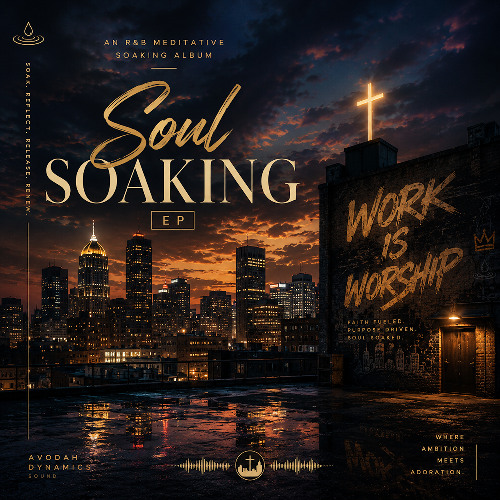
Explore the Avodah Sound listening experience for faith-rooted soundscapes to accompany reflection, prayer, and meaningful work.
Frequently asked questions about Christian renewal
What is Christian renewal?
Christian renewal is the process of returning your attention, choices, and daily rhythms to God’s wisdom. It can include prayer and Scripture, along with rest, boundaries, community support, and practical changes to the conditions that have depleted you. It is not always immediate, and it does not require you to pretend that a hard season was easy.
How do I renew my faith when I feel spiritually dry?
Start small and honest. Name what you feel in prayer, read a short passage in context, and choose one practice you can repeat. You may also speak with a trusted pastor, mentor, counselor, or healthcare professional. You do not have to manufacture a strong feeling before you can take a faithful next step.
What does the Bible say about renewal after burnout?
Scripture describes renewed thinking in Romans 12:1–2, God’s strength for the weary in Isaiah 40:27–31, and hope amid grief in Lamentations 3:19–26. These passages offer spiritual grounding, not a diagnosis or a guaranteed recovery timeline. Practical changes and appropriate care may also be important.
Is needing rest a sign of weak faith?
No. Feeling depleted does not by itself tell you the state of your faith. Rest and support are part of caring for a human life with real limits. If exhaustion is persistent or makes daily functioning difficult, consider seeking qualified help as well as spiritual support.
How can I begin a Christian reset without overcommitting?
Choose one stabilizing action, one short spiritual practice, and one conversation or boundary that could reduce unnecessary strain. Keep the plan small enough to repeat. Review it after a week and adjust according to what your actual capacity allows.
Your next step
If you want a structured prayer rhythm to support your rebuild, begin the 21-Day Prayer Challenge. Start with one honest prayer and one day at a time.
Leave a Reply