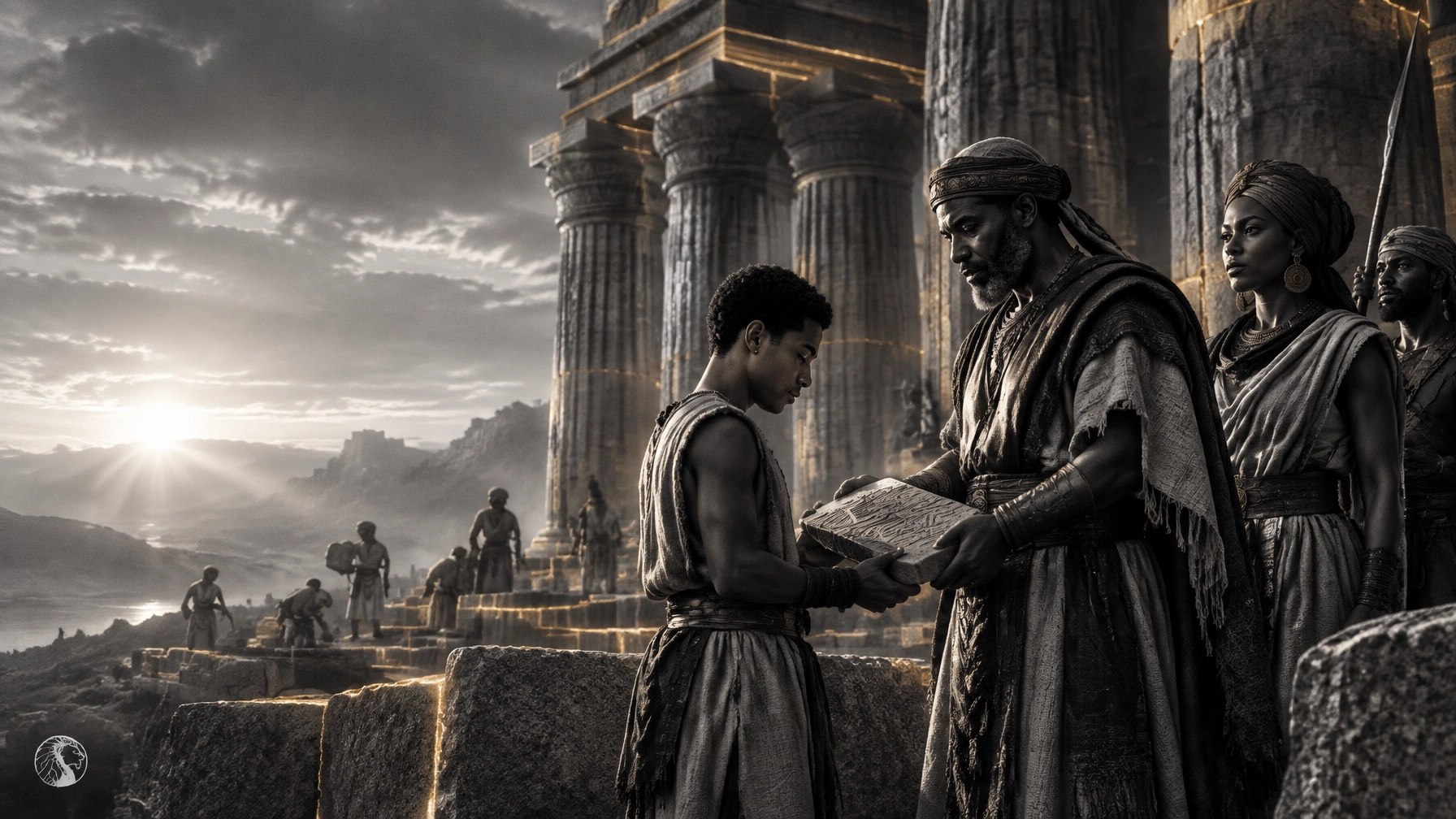
Legacy is not a plaque with your name on it.
Legacy is what still works when you are no longer in the room.
For a Kingdom Builder, that means more than accumulating money, followers, credentials, or professional status. It means building people, systems, wisdom, culture, and resources that continue carrying purpose forward.
This is the difference between short-term visibility and biblical legacy.
The Kingdom Builder Wisdom Protocol establishes the foundation: build with discernment, not impulse. The Kingdom Builder Vision Protocol clarifies the horizon: see beyond the next quarter. This Legacy Protocol answers the next question:
What must you build now so the assignment can continue through others later?
At Avodah Dynamics, we are reclaiming the Monday-to-Saturday hustle as a masterclass in biblical leadership development and christian lifestyle for a higher purpose.
That is the legacy mandate. Work is worship. Ambition is stewardship. Vision without execution is fantasy.
What Is Kingdom Builder Legacy?
Kingdom builder legacy is the intentional architecture of faith, character, relationships, work, resources, and systems that outlive your immediate involvement.
It is not about controlling the future. It is about preparing the future.
You are not called to make yourself indispensable. You are called to make the work transferable.
Moses: Mosheh (מֹשֶׁה): did not enter the Promised Land, but he prepared Joshua to lead Israel forward. His relevance is direct: Kingdom leadership is measured not only by what you accomplish, but by who is ready because you were faithful.
Legacy requires a longer horizon than personal achievement. Here are seven ways to build what outlives you.
1. Define the Assignment Before You Scale the Output
Legacy starts with clarity.
If you do not know what you are building, you will spend your life multiplying activity instead of multiplying impact. Before you scale your business, platform, ministry, career, or creative work, define the assignment underneath it.
Ask:
- What problem am I called to solve?
- Who is better because this work exists?
- What Kingdom value must remain intact as the work grows?
- What should continue even if my name disappears from it?
The Vision Protocol uses the Chazon framework: Receive, Write, Run, Wait. Receive the vision. Write the blueprint. Run the next faithful step. Wait without abandoning the build.
Legacy is not created by vague inspiration. It is created when vision becomes a repeatable direction.
Joseph: Yosef (יוֹסֵף): is a model of assignment under pressure. He carried a future he could not yet see clearly, then developed the administrative systems to preserve an entire nation during famine. His relevance to faith-rooted innovation is practical: revelation must eventually become infrastructure.
A Kingdom Builder is Built Different because they are not merely chasing an opportunity. They are stewarding an assignment.
2. Build People Who Can Carry the Work Further
If everything depends on your energy, your personality, or your personal approval, you have not built a legacy. You have built a bottleneck.
Legacy requires succession.
Identify the people who need access to your wisdom, relationships, methods, and opportunities. Then stop hoarding what they need to grow.
Create a simple succession map:
- Who am I mentoring?
- What responsibility can they own within the next 90 days?
- What knowledge must I document before transferring that responsibility?
- What feedback loop will help them improve without becoming dependent on me?
Moses prepared Joshua. Paul: Sha’ul (שָׁאוּל): developed leaders such as Timothy and Titus. Their relevance is clear: human-impact innovation multiplies when leaders create more leaders instead of collecting admirers.
Your goal is not to reproduce your limitations. Your goal is to release people who can carry the mission with greater reach, sharper skill, and deeper integrity.
That is called to more leadership.

3. Codify the Wisdom That Currently Lives in Your Head
Unwritten wisdom is fragile.
If your process only exists in memory, your team cannot repeat it. If your lessons only exist in conversation, your family cannot inherit them. If your leadership insights are never recorded, the next generation is forced to start from zero.
Build a legacy archive.
Document:
- Your core principles
- Your most expensive mistakes
- Your decision-making filters
- Your spiritual disciplines
- Your professional standards
- Your financial lessons
- Your approach to conflict
- Your methods for serving people well
Use a shared document, private audio journal, family archive, operating manual, or annual letter. The format matters less than the consistency.
The Kingdom Builder Creation Protocol reinforces this principle: creation is stewardship. Ideas become useful when they are shaped into artifacts that serve real people.
Bezalel: Betsal’el (בְּצַלְאֵל): was gifted with wisdom, understanding, and craftsmanship to build the tabernacle. His relevance is powerful for modern builders: excellence is not decoration. Skill, design, and careful execution can become sacred service.
Do not just tell people what you believe. Leave behind a structure that teaches them how to build.
4. Turn Your Values Into Operating Standards
Legacy is sustained through culture.
Culture is not what you print on a wall. It is what people repeat when pressure arrives.
If integrity matters, define what integrity looks like in hiring, pricing, communication, deadlines, conflict, and money. If generosity matters, create a rhythm for giving. If excellence matters, establish a review process. If family matters, protect the calendar.
Convert values into standards:
- Value: Integrity
Standard: We tell the truth before the truth becomes expensive. - Value: Stewardship
Standard: We manage resources before asking for more. - Value: Service
Standard: We solve the real problem, not the visible symptom. - Value: Excellence
Standard: We improve the work before we amplify it.
This is where Work Is Worship becomes more than language. It becomes a daily operating system.
The most durable biblical legacy is not a personality cult. It is a culture strong enough to remain aligned when the founder is absent.
5. Steward Money, Access, and Influence for Generational Good
A legacy that ignores stewardship is incomplete.
Money is not the whole assignment, but money affects the assignment. Poor financial decisions can limit your capacity to serve, employ, create, give, and transfer opportunity.
Build a stewardship architecture that includes:
- A clear household or organizational budget
- Emergency reserves
- Debt reduction priorities
- Generosity targets
- Long-term investment decisions
- Insurance and estate planning
- Financial education for the next generation
- A written plan for how resources should be used beyond your lifetime
Chazon Strategies™ serves as Avodah Dynamics’ financial literacy, stewardship, and legacy engine: its life-design arm for practical execution protocols. The goal is not accumulation for ego. The goal is capacity for Kingdom impact.
David: David (דָּוִד): understood that preparation could outlive personal possession. He gathered resources and organized materials for the temple that Solomon would build. His relevance is a picture of stewardship without ownership: sometimes your assignment is to prepare what someone else will complete.
That is not failure. That is mature leadership.
6. Practice the Character You Want Inherited
People inherit your patterns before they inherit your property.
Your children, team members, students, clients, and community will remember how you handled pressure. They will study how you treated people with less power. They will notice whether your private life contradicted your public message.
Character is legacy in its earliest form.
Build visible rhythms of:
- Honest repentance
- Patient correction
- Consistent prayer
- Responsible rest
- Financial integrity
- Humble learning
- Courageous decision-making
- Reconciliation after conflict
The legacy question is not only, “What did you build?”
It is also, “What did people become around you?”
A Kingdom Builder cannot outsource character to branding. Your life is part of the architecture.
7. Create a Review and Succession Rhythm
Legacy does not happen by accident. It requires scheduled attention.
At least once each quarter, conduct a Legacy Review. Ask:
- What am I building that will still matter in ten years?
- What currently depends too much on me?
- Who is growing because of the access I provide?
- What wisdom have I failed to document?
- Are my financial systems aligned with my values?
- What part of the culture needs reinforcement?
- If I stepped away for 90 days, what would break?
Then act on the answers.
Nehemiah: Neḥemyah (נְחֶמְיָה): did not merely rebuild a wall. He organized people, assigned responsibility, established accountability, confronted injustice, and protected the work. His relevance is essential to faith-rooted innovation: a vision becomes durable when it is governed by structure.
Do not wait until retirement, crisis, or grief to think about succession. Build the handoff while the work is healthy.

The Legacy Protocol in One Sentence
Clarify the assignment, multiply leaders, document wisdom, institutionalize values, steward resources, embody character, and review the build before the future demands it.
That is how a Kingdom Builder thinks beyond the next launch, promotion, paycheck, or quarter.
Legacy is not about being remembered forever. It is about making faithfulness transferable.
For a soundtrack while you work through your Legacy Review, pair this article with the Avodah deep-work sound experience. Let the atmosphere reinforce the architecture: less noise, more alignment; less performance, more formation.

Your Next Build
Write one page titled “What Must Continue?”
List the people, principles, systems, resources, and practices that should remain active if your name were removed from the work.
Then choose one item and build its first protocol this week.
If you are ready to move from intention to disciplined execution, enter the Tribal Challenge. Build with people who understand that transformation requires structure, accountability, and a willingness to become an Avodahian: Built Different and Called to More.
Frequently Asked Questions
What is kingdom builder legacy?
Kingdom builder legacy is the intentional development of people, systems, character, resources, and culture that continue serving God’s purposes after your direct involvement ends.
How is biblical legacy different from personal success?
Personal success often measures achievement, visibility, or wealth. Biblical legacy measures faithfulness, stewardship, multiplication, character, and the lasting good produced through your work.
Does legacy only apply to parents, pastors, or business owners?
No. Every professional, educator, entrepreneur, creator, and community leader leaves patterns behind. Legacy begins wherever your decisions influence other people.
What is the first step in building a legacy?
Clarify your assignment. You need to know what you are building, who it serves, and which values must remain protected as the work grows.
How can I start building legacy with limited money or influence?
Start with what you already control: your habits, wisdom, relationships, work quality, calendar, and integrity. Legacy begins with faithful systems before it becomes a financial structure.
Leave a Reply