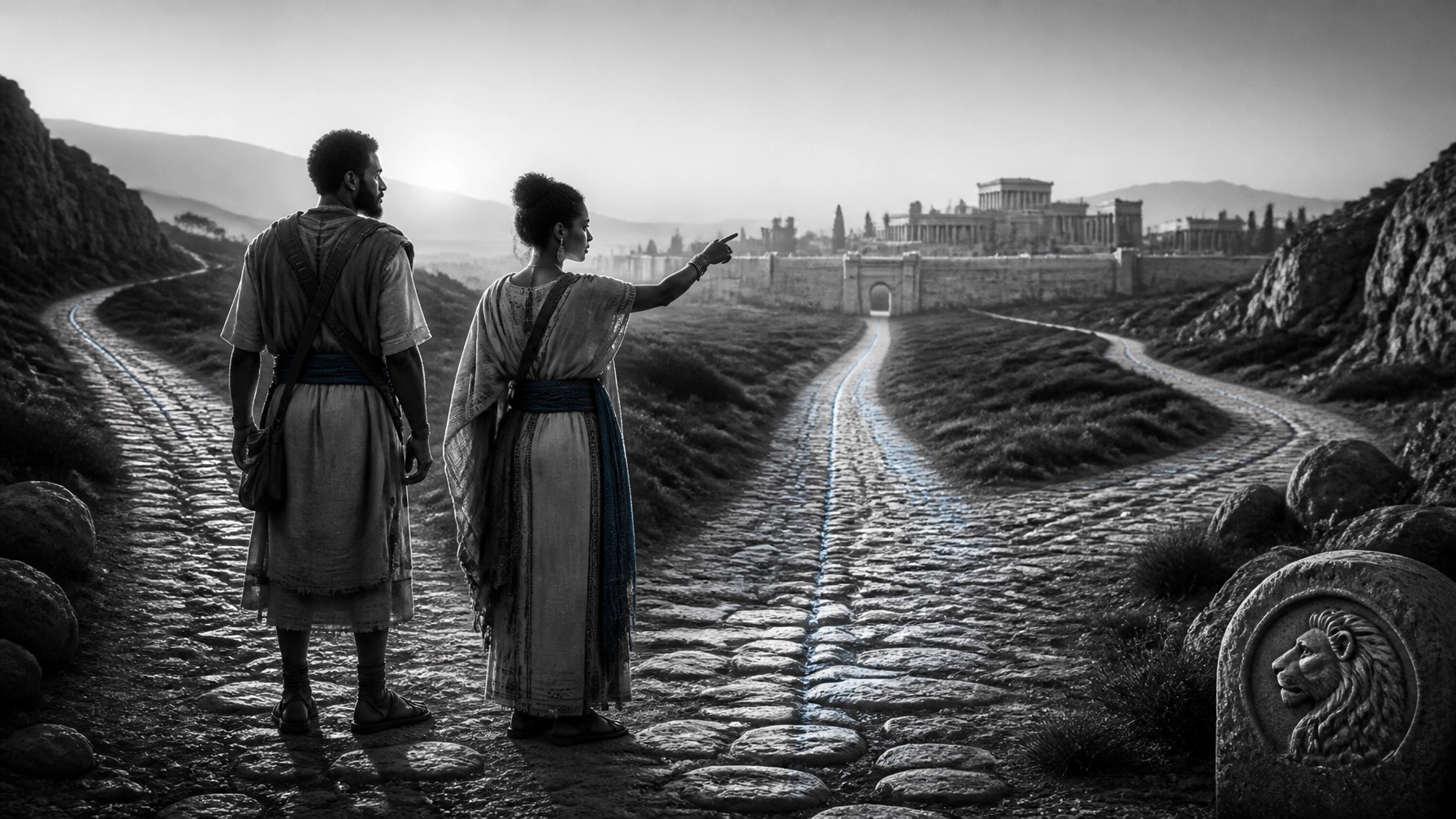
The Hebrew word derech: written דֶּרֶךְ: means “way,” “road,” “path,” or “journey.” But in Scripture, it carries more weight than a route on a map.
Derech in Hebrew describes the direction of a life, the pattern of a person’s conduct, and the road formed by repeated decisions. It is not only where you are going. It is how you walk, what you practice, and what your daily choices reveal about who you are becoming.
That makes derech a foundational word for anyone building with purpose.
A Kingdom Builder does not need more inspiration without structure. You need a way that can hold your vision through pressure, delay, leadership, money, relationships, and the long middle of execution.
As Avodah Dynamics states in its After the Marquee manifesto: “At Avodah Dynamics, we are reclaiming the Monday-to-Saturday hustle as a masterclass in biblical leadership development and christian lifestyle for a higher purpose.”
That is the question behind derech: What way are your ordinary decisions creating?
1. Derech Means More Than a Destination
The most direct derech meaning is a road or path: a route that has been traveled. The term is connected to a Hebrew root associated with treading or walking. A derech is, in the most literal sense, a way made usable by repeated footsteps.
Biblical Hebrew often moves from the physical to the symbolic. A road becomes a pattern. A path becomes a lifestyle. Direction becomes character.
This is why Scripture can speak of:
- The way of the Lord
- The way of wisdom
- The way of righteousness
- The way of the wicked
- The way of peace
- The way of life
The word does not describe a vague spiritual feeling. It describes a defined course.
You may have a destination called leadership, entrepreneurship, influence, or legacy. But your derech is the system of choices carrying you there: or pulling you somewhere else.
Vision without execution is fantasy. Derech gives vision a route.
2. Derech in Hebrew Is a Pattern of Movement
The word derech is active. It assumes movement, but not frantic motion.
There is a difference between being busy and being on a way.
Busy people can move in circles. Builders move with direction. The question is not whether you are working hard. The question is whether your work is forming a path that aligns with your calling.
Psalm 1 contrasts the way of the righteous with the way of the wicked. Proverbs repeatedly describes wisdom as a path to walk. Jeremiah 6:16 calls people to examine the ancient paths and ask where the good way is.
In each case, the emphasis is practical. A way must be chosen, entered, and walked.
Your calendar is a map of your current derech.
So is your bank account. So is your attention. So is the way you handle conflict when nobody can reward you for integrity.
Your path is being built through:
- What you repeatedly prioritize
- What you consistently tolerate
- What you practice under pressure
- What you do with resources
- Who you allow to shape your direction
Derech turns identity into observable rhythm.

3. The Way Reveals the Builder
A Kingdom Builder is not defined only by a large vision. Many people can imagine impact. Fewer can build a way of life capable of carrying it.
Derech asks a sharper question:
Who are you becoming through the way you are currently walking?
A person can pursue success through a derech of anxiety, ego, comparison, and exhaustion. The destination may look impressive while the path quietly destroys the builder.
That is why alignment matters.
At Avodah Dynamics, Work Is Worship means your labor is not separated from your formation. The way you answer emails, lead a team, manage money, finish a project, or keep a promise becomes part of your spiritual architecture.
The work is not merely producing an outcome. It is producing a person.
This is also where the Avodahian identity becomes practical. An Avodahian is not someone who uses spiritual language while operating without discipline. An Avodahian is a person learning to build with faith, focus, integrity, and forward momentum.
Built Different is not a slogan for individual superiority. It is a commitment to a different way.
4. Derech Requires Discernment at the Crossroads
Every serious builder eventually reaches a crossroads.
One road offers speed but compromises character. Another offers visibility but drains your soul. A third appears slower, yet creates durable strength.
The ancient world understood roads as strategic realities. A road connected cities, resources, families, armies, and economies. Choosing the wrong route could cost years. The same is true today.
Discernment is not indecision. It is the discipline of identifying which path deserves your obedience.
Before accepting an opportunity, launching a project, or making a major financial decision, ask:
- Does this path reinforce my assignment or feed my insecurity?
- What will this require from my character?
- Can I sustain this pace without violating stewardship?
- Who benefits if I walk this way?
- What does this choice train me to become?
The Avodah guide to Kingdom decision-making frames discernment as a protocol, not a guess. That distinction matters. Direction becomes clearer when your decisions are governed by principles instead of impulse.

5. The Good Way Is Built Through Repetition
Most people want a breakthrough. Scripture often emphasizes a way.
A breakthrough may change your circumstances. A way changes your capacity.
The path of wisdom is formed through repeated obedience:
- A daily practice of prayer
- A weekly review of priorities
- Honest financial stewardship
- Deep work protected from distraction
- Rest that prevents ambition from becoming idolatry
- Relationships that sharpen rather than flatter
- Completion of the assignments already in front of you
The way becomes visible after enough steps.
This is why a protocol matters. A protocol converts conviction into repeatable action. It gives your values a structure strong enough to survive changing moods.
The Nehemiah blueprint for strategic execution offers a useful example: vision was paired with inspection, planning, delegation, defense, and persistence. The wall was not rebuilt by enthusiasm alone. It was rebuilt through an organized way of working.
Your derech needs the same architecture.
6. Derech Includes the Way You Handle a Difficult Season
A path is easiest to celebrate when the sun is visible. The deeper question is how you walk when the road becomes unclear.
Seasons of anxiety, rejection, grief, burnout, or doubt can make you question whether you are still on the right way. But difficulty does not automatically mean misdirection. Sometimes the long road is where endurance, wisdom, and humility are developed.
The answer is not to glorify exhaustion. It is to examine the season honestly.
If anxiety is narrowing your decisions, create a pause before reacting. If overthinking is keeping you from obedience, reduce the next step until it becomes executable. If burnout has made your work unsustainable, rebuild your boundaries and seek qualified support.
Avodah’s Anxiety library and daily prayer for work and leadership offer language for bringing internal pressure into a grounded rhythm of reflection, prayer, and action.
Derech does not demand that you pretend the road is easy. It calls you to walk it with honesty.
7. The Way Is Communal, Not Merely Individual
Although derech describes a person’s course, Scripture often treats the way as something shaped within a people.
No one builds a durable life in isolation.
Your environment teaches you what is normal. Your community affects your pace. Your mentors expose blind spots. Your collaborators determine whether your vision becomes a structure or remains an idea.
This is why the Avodah Ecosystem connects content, belief, identity, community, and products. The goal is not to sell isolated inspiration. The goal is to help people become builders who can sustain aligned action.
A strong community does not remove responsibility. It strengthens it.
The right people will not only applaud your destination. They will challenge your way of getting there.
8. Derech Is a Daily Audit of Alignment
So, what is derech?
It is the road beneath your feet and the pattern behind your life.
It is your direction, conduct, journey, and mode of action. It is the practical answer to the question, “What way am I choosing?”
For the Kingdom Builder, derech creates a daily audit:
- Direction: Is my work moving toward what I am called to build?
- Character: Who am I becoming through this process?
- Stewardship: Am I handling time, money, influence, and energy faithfully?
- Discipline: What repeated action will make this vision real?
- Community: Who is helping me walk with wisdom?
- Rest: Is my pace sustainable enough to preserve the builder?
Chazon Strategies™, the financial literacy, stewardship, and legacy engine of Avodah Dynamics, extends this work into practical execution protocols. Because your way must include not only what you believe, but how you manage resources and design a legacy.
The goal is not a perfect path. The goal is an aligned one.
You are Built Different. You are Called to More. But calling becomes credible when your daily way can carry it.
Listening Companion: Give the Way a Rhythm
For a focused study atmosphere, explore the Avodah Sound library or the Avodah Dynamics SoundCloud collection. Avodah Sound pairs Scripture, sound, prayer, and deep work for builders creating beyond Sunday.
Frequently Asked Questions About Derech
What is the derech meaning in Hebrew?
The Hebrew word derech (דֶּרֶךְ) means “way,” “road,” “path,” or “journey.” Figuratively, it can describe a person’s conduct, course of life, habits, or moral direction.
What does derech mean in the Bible?
In the Bible, derech can refer to a literal road or route, but it frequently describes a way of living. Expressions such as “the way of the Lord” communicate a pattern of conduct aligned with God’s character and instruction.
Is derech spelled derekh or derek?
Both spellings represent the same Hebrew word. Derekh reflects the final Hebrew letter khet more closely, while derek is a common simplified transliteration in English.
What is the difference between derech and a destination?
A destination is where you intend to arrive. Derech includes the route, practices, decisions, and character formed along the journey. It focuses on the way you live while pursuing the goal.
How can I apply derech to my professional life?
Translate your values into repeatable protocols. Review your calendar, financial decisions, relationships, work habits, and pace. Then choose practices that align your ambition with integrity, stewardship, and sustainable execution.
Go Deeper
If you are ready to turn direction into disciplined practice, enter the Tribal Challenge and begin building a way of life that can carry your calling.
Leave a Reply